
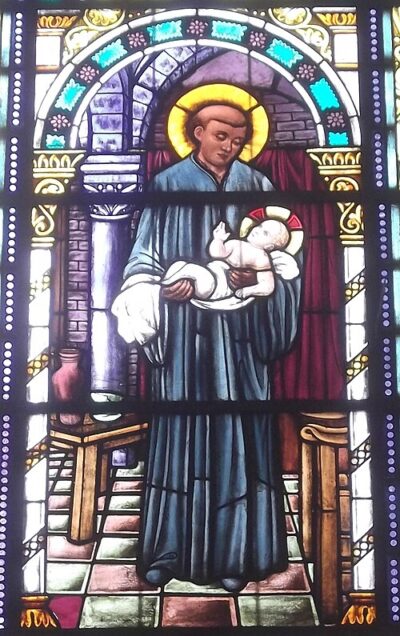
Benedict the Moor
Benedict the Moor was an Italian-born African Franciscan friar in Sicily. Born March 31, 1526, in San Fratello. Died April 4, 1589, in Palermo. Positions held include abbot.
Facts
9 facts · 2 confirmed by two sources · 0 cited · 7 from one source
Where this comes from
Papalocal keeps its own record. It started from these sources; what each one said is kept here as it was copied, so a change on their side never changes this page by itself. Tap one to read its version.
What Wikidata says · copied November 18, 2026 · revision 2570813901
- Described as
- Italian-born African Franciscan friar in Sicily
- Other names
- Benedetto da San Fratello, Benedict the African, Saint Benedict the Moor
- Born
- March 31, 1526
- Died
- April 4, 1589 · 1 reference
- Born in
- San Fratello
- Died in
- Palermo
- Buried in
- Sicily
- Citizen of
- Ethiopia
- Occupation
- friar
- Positions held
- abbot
- Religion
- Catholic Church
- Wikipedias with a page
- 22
Wikidata item Q559356 (wikidata.org/wiki/Q559356), public domain (CC0). Copied November 18, 2026.
What Wikipedia says · copied November 18, 2026 · revision 1376914931
Benedict the Moor (Italian: Benedetto il Moro; 1526 – 4 April 1589), also known as Benedict of Palermo, Benedict the Black, or Benedict the African, was an Afro-Sicilian Franciscan friar. He was born to enslaved Africans in San Fratello, Sicily and freed at birth. He became known for his charity.
As a young man, he joined a Franciscan-affiliated hermit group, of which he became the leader. In 1564 he was sent to the Franciscan friary in Palermo, where he continued good works. He died in 1589 and was canonized by Pope Pius VII in 1807.
- Born, in its opening lines
- 1526
- Died, in its opening lines
- April 4, 1589
From the Wikipedia article “Benedict the Moor” (en.wikipedia.org/wiki/Benedict_the_Moor), by its contributors, under CC BY-SA 4.0 (creativecommons.org/licenses/by-sa/4.0/). Copied November 18, 2026; not changed.
Confirmed Two sources agree. Cited One source, and it names where it got it. One source One source, without a reference of its own. Sources disagree The sources disagree. We show the best-supported value and keep theirs below.
