
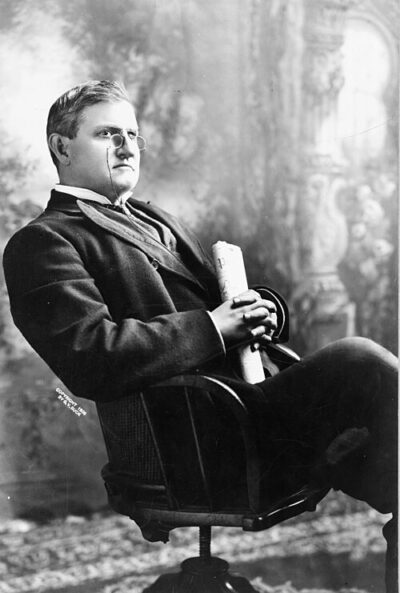
Benjamin Tillman
Benjamin Tillman was an American politician. Born August 11, 1847, in South Carolina. Died July 3, 1918, in Washington, D.C.. Positions held include Governor of South Carolina (1890–1894) and United States senator (1895–1918).
Facts
17 facts · 2 confirmed by two sources · 6 cited · 9 from one source
Where this comes from
Papalocal keeps its own record. It started from these sources; what each one said is kept here as it was copied, so a change on their side never changes this page by itself. Tap one to read its version.
What Wikidata says · copied November 18, 2026 · revision 2569729237
- Described as
- American politician (1847–1918)
- Other names
- Pitchfork Ben Tillman, Benjamin R. Tillman, Ben Tillman, Benjamin Ryan Tillman, Jr., Benjamin Ryan Tillman
- Born
- August 11, 1847 · 4 references
- Died
- July 3, 1918 · 4 references
- Born in
- South Carolina
- Died in
- Washington, D.C. · 1 reference
- Buried in
- Ebenezer Baptist Church Cemetery · 1 reference
- Name at birth
- Benjamin Ryan Tillman
- Citizen of
- United States
- Occupation
- politician · 1 reference
- Positions held
- Governor of South Carolina (1890–1894); United States senator (1895–1918) · 1 reference
- Political party
- Democratic Party
- Spouse
- Sallie Tillman
- Children
- Benjamin Ryan Tillman III
- Father
- Benjamin Ryan Tillman
- Siblings
- George D. Tillman · 1 reference
- Religion
- Christianity
- Nickname
- Pitchfork · 1 reference
- Wikipedias with a page
- 19
Wikidata item Q736903 (wikidata.org/wiki/Q736903), public domain (CC0). Copied November 18, 2026.
What Wikipedia says · copied November 18, 2026 · revision 1379612451
Benjamin Ryan Tillman (August 11, 1847 – July 3, 1918) was an American Democratic Party politician who served as governor of South Carolina from 1890 to 1894, and as a United States Senator from 1895 until his death in 1918. A white supremacist who opposed civil rights for black Americans, Tillman led a paramilitary group of Red Shirts during South Carolina's violent 1876 election. On the floor of the U.S. Senate, he defended lynching, and frequently ridiculed black Americans in his speeches, boasting of having helped kill them during that campaign.
In the 1880s, Tillman, a wealthy landowner, became dissatisfied with the Democratic leadership and led a movement of white farmers calling for reform. He was initially unsuccessful, though he was instrumental in the founding of Clemson University as an agricultural land-grant college. In 1890, Tillman took control of the state Democratic Party, and was elected governor. During his four years in office, 18 black Americans were lynched in South Carolina; in the 1890s, the state had its highest number of lynchings of any decade. Tillman tried to prevent lynchings as governor but also spoke in support of the lynch mobs, alleging his own willingness to lead one. In 1894, at the end of his second two-year term, he was elected to the U.S. Senate by vote of the state legislature, who elected senators at the time.
Tillman was known as "Pitchfork Ben" because of his aggressive language, such as when he threatened to use a pitchfork to prod that "bag of beef", referring to President Grover Cleveland. Considered a possible candidate for the Democratic nomination for president in 1896, Tillman lost any chance after giving a disastrous speech at the convention. He became known for his virulent oratory—especially against black Americans—but also for his effectiveness as a legislator. The first federal campaign finance law, banning corporate contributions, is commonly called the Tillman Act. Tillman was repeatedly re-elected, serving in the Senate for the rest of his life. One of his legacies was South Carolina's 1895 constitution, which disenfranchised most of the black majority and many poor whites, and ensured white Democratic Party rule for more than six decades into the 20th century.
- Born, in its opening lines
- August 11, 1847
- Died, in its opening lines
- July 3, 1918
From the Wikipedia article “Benjamin Tillman” (en.wikipedia.org/wiki/Benjamin_Tillman), by its contributors, under CC BY-SA 4.0 (creativecommons.org/licenses/by-sa/4.0/). Copied November 18, 2026; not changed.
Confirmed Two sources agree. Cited One source, and it names where it got it. One source One source, without a reference of its own. Sources disagree The sources disagree. We show the best-supported value and keep theirs below.
