
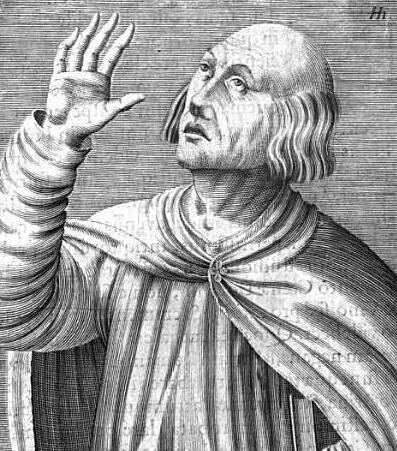
Berengar of Tours was a medieval theologian (vers 990-1088). Born 998, in Tours. Died January 6, 1088, in La Riche.
Facts
10 facts · 1 confirmed by two sources · 3 cited · 6 from one source
Where this comes from
Papalocal keeps its own record. It started from these sources; what each one said is kept here as it was copied, so a change on their side never changes this page by itself. Tap one to read its version.
What Wikidata says · copied November 18, 2026 · revision 2567490849
- Described as
- medieval theologian (vers 990-1088)
- Other names
- Berengarius of Tours, Berenger of Tours
- Born
- 998
- Died
- January 6, 1088 · 1 reference
- Born in
- Tours · 1 reference
- Died in
- La Riche
- Citizen of
- France · 1 reference
- Occupation
- theologian · 1 reference; philosopher · 1 reference; scholaster · 1 reference; grammarian · 1 reference
- Religion
- Catholic Church · 1 reference
- Wikipedias with a page
- 24
Wikidata item Q435006 (wikidata.org/wiki/Q435006), public domain (CC0). Copied November 18, 2026.
What Wikipedia says · copied November 18, 2026 · revision 1385559669
Berengar of Tours (died 6 January 1088) was an 11th-century French Catholic theologian and archdeacon of Angers. His leadership of the School of Chartres set an example of intellectual inquiry through the revived tools of dialectic that was soon followed at cathedral schools of Laon and Paris. Berengar was distinguished from mainline Catholic theology by two views: his assertion of the supremacy of Scripture and his denial of transubstantiation. According to Thomas Aquinas, "Berengarius ... withdrew his error and acknowledged the truth of the faith."
- Died, in its opening lines
- January 6, 1088
From the Wikipedia article “Berengar of Tours” (en.wikipedia.org/wiki/Berengar_of_Tours), by its contributors, under CC BY-SA 4.0 (creativecommons.org/licenses/by-sa/4.0/). Copied November 18, 2026; not changed.
Confirmed Two sources agree. Cited One source, and it names where it got it. One source One source, without a reference of its own. Sources disagree The sources disagree. We show the best-supported value and keep theirs below.
