
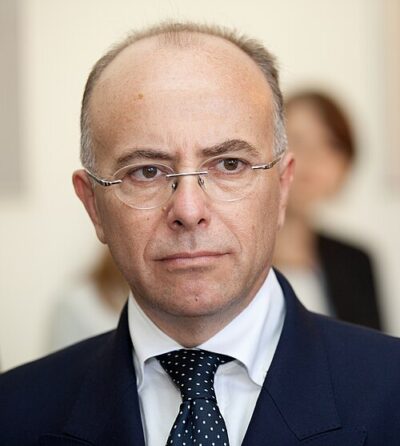
Bernard Cazeneuve
Bernard Cazeneuve is a French prime minister. Born June 2, 1963, in Senlis. Positions held include mayor of a place in France (1995–2000), regional council member and member of the general council. Educated at Institut d'études politiques de Bordeaux. Awards include Grand Cross of the Order of Civil Merit, Great Cross with Star and Sash of the Order of Merit of the Federal Republic of Germany and Commander with Star of the Order of Merit of the Republic of Poland.
Facts
24 facts · 1 confirmed by two sources · 6 cited · 17 from one source
Where this comes from
Papalocal keeps its own record. It started from these sources; what each one said is kept here as it was copied, so a change on their side never changes this page by itself. Tap one to read its version.
What Wikidata says · copied November 16, 2026 · revision 2562787427
- Described as
- French prime minister
- Other names
- Bernard Guy Georges Cazeneuve
- Born
- June 2, 1963 · 4 references
- Born in
- Senlis
- Citizen of
- France
- Occupation
- lawyer · 1 reference; politician · 1 reference
- Positions held
- mayor of a place in France (1995–2000); regional council member; member of the general council; Minister of the Interior of France (2014–2016); Prime Minister of France (2016–2017); spokesperson
- Political party
- Socialist Party; Young Radicals of the Left; La Convention (2023–) · 1 reference
- Education
- Institut d'études politiques de Bordeaux
- Awards
- Grand Cross of the Order of Civil Merit (2015) · 1 reference; Great Cross with Star and Sash of the Order of Merit of the Federal Republic of Germany (2016) · 1 reference; Commander with Star of the Order of Merit of the Republic of Poland (2012) · 1 reference; Grand Officer of the Order of Merit of the Italian Republic (2012) · 1 reference; Commander of the Legion of Honour (2017) · 1 reference
- Spouse
- Véronique Cazeneuve
- Children
- Nathan Cazeneuve
- Father
- Gérard Cazeneuve · 1 reference
- Religion
- agnosticism · 1 reference
- Wikipedias with a page
- 58
Wikidata item Q560890 (wikidata.org/wiki/Q560890), public domain (CC0). Copied November 16, 2026.
What Wikipedia says · copied November 16, 2026 · revision 1380997678
Bernard Guy Georges Cazeneuve (French: [bɛʁnaʁ kaznœv]; born 2 June 1963) is a French politician and lawyer who served as Prime Minister of France from 6 December 2016 to 15 May 2017. He represented Manche's 5th constituency in the National Assembly from 1997 to 2002 and again from 2007 to 2012, in addition to the department's 4th constituency briefly in 2012 and 2017. For most of his political career, he was a member of the centre-left Socialist Party, but quit in 2022 after disagreeing with the party's decision to join an electoral coalition agreement that included the leftist La France Insoumise.
He was Mayor of Cherbourg-Octeville from 2001 to 2012. In 2012, he was appointed Minister Delegate for European Affairs in the Ayrault government. A year later, Cazeneuve was named Minister Delegate for the Budget after the resignation of Jérôme Cahuzac. In 2014, he was appointed Minister of the Interior in the First Valls government, a role he retained with the formation of the Second Valls government. In 2016, Cazeneuve was appointed prime minister by President François Hollande, after Manuel Valls resigned to concentrate on his candidacy for the 2017 presidential election. Following the election of Emmanuel Macron as President of the French Republic, Cazeneuve resigned from office and returned to private practice. During the 2024 French political crisis, Cazeneueve was reported to be the front-runner candidate for Prime Minister but was ultimately passed over in favor of Michel Barnier.
- Born, in its opening lines
- June 2, 1963
From the Wikipedia article “Bernard Cazeneuve” (en.wikipedia.org/wiki/Bernard_Cazeneuve), by its contributors, under CC BY-SA 4.0 (creativecommons.org/licenses/by-sa/4.0/). Copied November 16, 2026; not changed.
Confirmed Two sources agree. Cited One source, and it names where it got it. One source One source, without a reference of its own. Sources disagree The sources disagree. We show the best-supported value and keep theirs below.
