
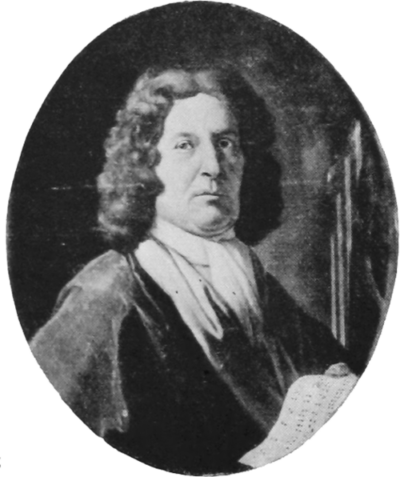
Bernardo Pasquini
Bernardo Pasquini was an Italian Baroque composer. Born December 7, 1637, in Massa e Cozzile. Died November 22, 1710, in Rome.
Facts
14 facts · 1 confirmed by two sources · 5 cited · 7 from one source · 1 where the sources disagree
What’s different
- Born: we show December 7, 1637 (Confirmed). Wikidata also lists December 8, 1637
- Died: we show November 22, 1710 (Sources disagree). Wikipedia says November 21, 1710
Where this comes from
Papalocal keeps its own record. It started from these sources; what each one said is kept here as it was copied, so a change on their side never changes this page by itself. Tap one to read its version.
What Wikidata says · copied November 16, 2026 · revision 2567362107
- Described as
- Italian Baroque composer
- Born
- December 7, 1637 · 2 references; December 8, 1637 · 1 reference
- Died
- November 22, 1710 · 4 references
- Born in
- Massa e Cozzile · 2 references
- Died in
- Rome · 3 references
- Buried in
- San Lorenzo in Lucina
- Occupation
- organist · 3 references; composer · 2 references; harpsichordist · 1 reference
- Member of
- Arcadian Academy
- Genre
- opera
- Instrument
- pipe organ; organ; musical instrument · 1 reference; harpsichord · 1 reference
- Wikipedias with a page
- 30
Wikidata item Q355191 (wikidata.org/wiki/Q355191), public domain (CC0). Copied November 16, 2026.
What Wikipedia says · copied November 16, 2026 · revision 1335799845
Bernardo Pasquini (7 December 1637 – 21 November 1710) was an Italian composer of operas, oratorios, cantatas and keyboard music. A renowned virtuoso keyboard player, he was one of the most important Italian composers for harpsichord between Girolamo Frescobaldi and Domenico Scarlatti, having also made substantial contributions to opera and oratorio.
- Born, in its opening lines
- December 7, 1637
- Died, in its opening lines
- November 21, 1710
From the Wikipedia article “Bernardo Pasquini” (en.wikipedia.org/wiki/Bernardo_Pasquini), by its contributors, under CC BY-SA 4.0 (creativecommons.org/licenses/by-sa/4.0/). Copied November 16, 2026; not changed.
Confirmed Two sources agree. Cited One source, and it names where it got it. One source One source, without a reference of its own. Sources disagree The sources disagree. We show the best-supported value and keep theirs below.
