
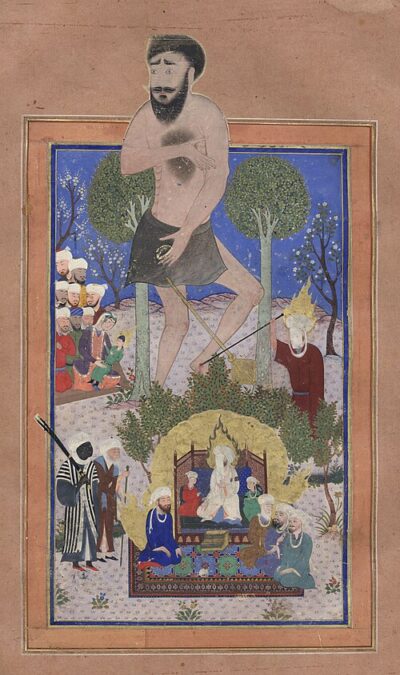
Bilal ibn Ribah
Bilal ibn Ribah was a companion of Muhammad and first Islamic mu'azzin (c.580–640). Born 581, in Kingdom of Aksum. Died 641, in Damascus.
Facts
9 facts · 0 confirmed by two sources · 2 cited · 5 from one source · 2 where the sources disagree
What’s different
- Born: we show 581 (Sources disagree). Wikipedia says March 5, 580
- Died: we show 641 (Sources disagree). Wikidata also lists 642
Where this comes from
Papalocal keeps its own record. It started from these sources; what each one said is kept here as it was copied, so a change on their side never changes this page by itself. Tap one to read its version.
What Wikidata says · copied November 16, 2026 · revision 2533202647
- Described as
- companion of Muhammad and first Islamic mu'azzin (c.580–640)
- Other names
- Bilal ibn Rabah al-Habashi, Bilal ibn Rabah, Bilal-i Habeşi, Bilal, son of Rabah, Bilal, Bilāl al-Ḥabashī
- Born
- 581
- Died
- 642; 641 · 1 reference
- Born in
- Kingdom of Aksum
- Died in
- Damascus
- Buried in
- Bab al-Saghir Cemetery · 1 reference
- Occupation
- companions of the Prophet; muezzin · 1 reference; butler · 1 reference
- Religion
- Islam
- Wikipedias with a page
- 63
Wikidata item Q493136 (wikidata.org/wiki/Q493136), public domain (CC0). Copied November 16, 2026.
What Wikipedia says · copied November 16, 2026 · revision 1382531425
Bilal ibn Rabah (Arabic: بِلَال بْن رَبَاح, romanized: Bilāl ibn Rabāḥ; 5 March 580 – 2 March 640 CE), also known as Bilāl al-Ḥabashī or simply Bilal, was a close companion of the Islamic prophet Muhammad. Born in Mecca, he was formerly enslaved. He is considered the first muʾazzin (caller to prayer) in Islam, personally chosen by Muhammad for his deep and melodious voice. He is often regarded as the first African or Black Muslim.
- Born, in its opening lines
- March 5, 580
- Died, in its opening lines
- March 2, 640
From the Wikipedia article “Bilal ibn Rabah” (en.wikipedia.org/wiki/Bilal_ibn_Rabah), by its contributors, under CC BY-SA 4.0 (creativecommons.org/licenses/by-sa/4.0/). Copied November 16, 2026; not changed.
Confirmed Two sources agree. Cited One source, and it names where it got it. One source One source, without a reference of its own. Sources disagree The sources disagree. We show the best-supported value and keep theirs below.
