
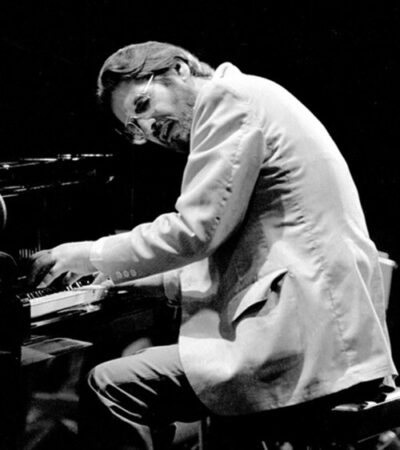
Bill Evans
Bill Evans was an American jazz pianist. Born August 16, 1929, in Plainfield. Died September 15, 1980, in New York City. Known for Waltz for Debby and Peace Piece. Educated at Southeastern Louisiana University and Mannes College The New School for Music. Awards include Grammy Lifetime Achievement Award.
Facts
32 facts · 2 confirmed by two sources · 8 cited · 22 from one source
Where this comes from
Papalocal keeps its own record. It started from these sources; what each one said is kept here as it was copied, so a change on their side never changes this page by itself. Tap one to read its version.
What Wikidata says · copied November 13, 2026 · revision 2557814870
- Described as
- American jazz pianist (1929–1980)
- Other names
- William J. Evans, William John Evans
- Born
- August 16, 1929 · 9 references
- Died
- September 15, 1980 · 8 references
- Born in
- Plainfield · 2 references
- Died in
- New York City · 1 reference
- Buried in
- Roselawn Memorial Park and Mausoleum · 1 reference
- Cause of death
- liver cirrhosis
- Name at birth
- William John Evans
- Citizen of
- United States · 1 reference
- Occupation
- jazz pianist; composer · 2 references; conductor; bandleader; jazz musician · 1 reference; pianist · 1 reference
- Education
- Southeastern Louisiana University; Mannes College The New School for Music; North Plainfield High School
- Member of
- The Bill Evans Trio; Miles Davis Quintet
- Genre
- jazz; modal jazz; cool jazz; post-bop
- Instrument
- piano · 1 reference
- Record label
- Warner Bros. Records; Concord Records; Fantasy; Riverside
- Known for
- Waltz for Debby; Peace Piece
- Awards
- Grammy Lifetime Achievement Award (1994)
- Military branch
- United States Army
- Wikipedias with a page
- 51
Wikidata item Q208205 (wikidata.org/wiki/Q208205), public domain (CC0). Copied November 13, 2026.
What Wikipedia says · copied November 13, 2026 · revision 1380440954
William John Evans (August 16, 1929 – September 15, 1980) was an American jazz pianist and composer who worked primarily as the leader of his trio. His extensive use of impressionist harmony, block chords, innovative chord voicings, and trademark rhythmically independent "singing" melodic lines continue to influence jazz pianists today.
Born in Plainfield, New Jersey, Evans studied classical music at Southeastern Louisiana College and the Mannes School of Music, in New York City, where he majored in composition and received an artist diploma. In 1955, he moved to New York City, where he worked with bandleader and theorist George Russell. In 1958, Evans joined Miles Davis's sextet, which in 1959, then immersed in modal jazz, recorded Kind of Blue, the best-selling jazz album of all time.
In late 1959, Evans left Davis's band and began his career as a leader, forming a trio with bassist Scott LaFaro and drummer Paul Motian, a group now regarded as a seminal modern jazz trio. They recorded two studio albums, Portrait in Jazz and Explorations, and two albums recorded during a 1961 engagement at New York's Village Vanguard jazz club: Sunday at the Village Vanguard and Waltz for Debby. A complete set (on three CDs) of their Vanguard recordings was issued decades later. Ten days after this booking ended, LaFaro died in a car crash. After months without public performances, Evans reemerged with a new trio featuring Chuck Israels on bass. In 1963, Evans recorded the Grammy Award–winning Conversations with Myself, a solo album produced with overdubbing technology. In 1966, he met bassist Eddie Gómez, with whom he worked for the next 11 years. In the mid-1970s, Evans collaborated with the singer Tony Bennett on two critically acclaimed albums: The Tony Bennett/Bill Evans Album (1975) and Together Again (1977).
Many of Evans's compositions, such as "Waltz for Debby" and "Time Remembered", have become standards, played and recorded by many artists. Evans received 31 Grammy nominations and seven awards, and was inducted into the DownBeat Jazz Hall of Fame.
- Born, in its opening lines
- August 16, 1929
- Died, in its opening lines
- September 15, 1980
From the Wikipedia article “Bill Evans” (en.wikipedia.org/wiki/Bill_Evans), by its contributors, under CC BY-SA 4.0 (creativecommons.org/licenses/by-sa/4.0/). Copied November 13, 2026; not changed.
Confirmed Two sources agree. Cited One source, and it names where it got it. One source One source, without a reference of its own. Sources disagree The sources disagree. We show the best-supported value and keep theirs below.
