Waltz for Debby
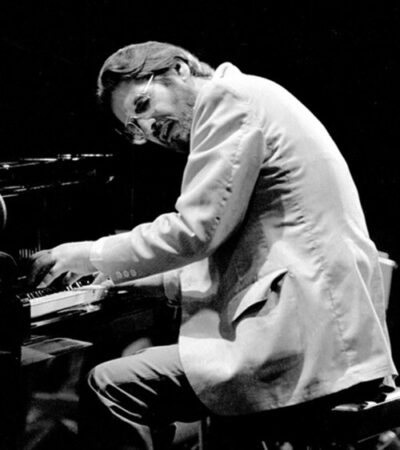
Waltz for Debby is a jazz standard composed by Bill Evans. It came out in 1956.
- Released
- 1956
- Performed by
- Bill Evans
- Genre
- jazz waltz
All 6 facts, and where they come from
Facts
6 facts · 0 confirmed by two sources · 1 cited · 5 from one source
Where this comes from
Papalocal keeps its own record. It started from these sources; what each one said is kept here as it was copied, so a change on their side never changes this page by itself. Tap one to read its version.
What Wikidata says · copied November 16, 2026 · revision 2569721917
- Described as
- jazz standard composed by Bill Evans
- What it is
- musical work/composition
- Performed by
- Bill Evans
- Music by
- Bill Evans · 1 reference
- Genre
- jazz waltz
- Released
- 1956
- Language
- no linguistic content
- Wikipedias with a page
- 6
Wikidata item Q3565959 (wikidata.org/wiki/Q3565959), public domain (CC0). Copied 2026-11-16.
What Wikipedia says · copied November 16, 2026 · revision 1354148777
"Waltz for Debby" is a jazz standard composed by pianist Bill Evans, which became "his most famous tune". He first recorded it as a brief solo piano piece on his debut album, New Jazz Conceptions (1956). "Debby" in the composition's title refers to Evans's then 3-year-old niece, Debby Evans, whom he often took to the beach.
The "definitive performance" of the piece is usually considered to be the live recording from the third set on 25 June 1961 at the Village Vanguard by the classic Bill Evans Trio featuring bassist Scott LaFaro and drummer Paul Motian. (It was also recorded as part of the second set, and that less famous version, take 1, has been made available on various releases as a bonus track.)In October 1963, Swedish poet Beppe Wolgers gave the song Swedish lyrics for jazz singer Monica Zetterlund, who in November 1963 released the song under the title "Monicas vals" on her EP Visa från Utanmyra. During a tour of Sweden with his trio in 1964, Evans heard the EP and was so impressed by Zetterlund's treatment of his waltz that a recording session was set up in Stockholm at the end of the tour in August 1964, in which his trio, then including Chuck Israels on bass and Larry Bunker on drums, accompanied her when she performed that version for the album Waltz for Debby: Monica Zetterlund, Bill Evans, which was released in December 1964 and contained nine additional English and Swedish songs.
In September 1964, a month after Evans's recording in Sweden, Evans's friend Gene Lees gave the waltz English lyrics for Tony Bennett's album Who Can I Turn To, released in November 1964. In June 1975, Evans eventually accompanied Bennett when he sang the English version (the only time Evans made a recording with the Gene Lees lyrics) for The Tony Bennett/Bill Evans Album, which was released in July 1975.
Including many posthumous releases, several dozen recordings of the waltz by Evans are now in circulation. His final recording of it dates from 7 September 1980, live at the Keystone Korner, just eight days before he died.
The waltz has been widely covered and recorded more than 300 times. Ted Gioia notes that in about 20% of cover versions, "Debby" is misspelled as "Debbie". "Waltz for Debby" is known in Finnish by the name "Ankin Valssi", with lyrics written by Jukka Kuoppamäki.
Evans had a particular fondness for the waltz form: Of his 50+ original compositions, at least 10 are waltzes, including "Very Early" (1949), "G Waltz" (1967), "B Minor Waltz" (1977), and "We Will Meet Again" (1977), and he frequently performed waltzes by others, such as Earl Zindars's "Elsa" and Gary McFarland's "Gary's Theme".
From the Wikipedia article “Waltz for Debby (song)” (en.wikipedia.org/wiki/Waltz_for_Debby_(song)), by its contributors, under CC BY-SA 4.0 (creativecommons.org/licenses/by-sa/4.0/). Copied 2026-11-16; not changed.
Confirmed Two sources agree. Cited One source, and it names where it got it. One source One source, without a reference of its own. Sources disagree The sources disagree. We show the best-supported value and keep theirs below.