
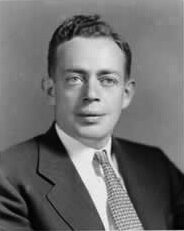
Bob Marshall was a Wilderness activist. Born January 2, 1901, in New York City. Died November 11, 1939, in New York City. Educated at Harvard University and Columbia University.
Facts
20 facts · 2 confirmed by two sources · 3 cited · 15 from one source
Where this comes from
Papalocal keeps its own record. It started from these sources; what each one said is kept here as it was copied, so a change on their side never changes this page by itself. Tap one to read its version.
What Wikidata says · copied November 19, 2026 · revision 2508837739
- Described as
- Wilderness activist
- Other names
- Robert Marshall
- Born
- January 2, 1901 · 2 references
- Died
- November 11, 1939 · 2 references
- Born in
- New York City · 1 reference
- Died in
- New York City · 2 references
- Buried in
- Salem Fields Cemetery · 1 reference
- Citizen of
- United States
- Occupation
- forester; conservationist; writer
- Worked for
- Bureau of Indian Affairs; United States Forest Service
- Education
- Harvard University; Columbia University; Johns Hopkins University; State University of New York College of Environmental Science and Forestry; Ethical Culture Fieldston School · 1 reference
- Father
- Louis Marshall
- Siblings
- George Marshall
- Website
- https://wilderness.org; https://www.nps.gov/gaar/learn/historyculture/bobmarshall.htm
- Wikipedias with a page
- 13
Wikidata item Q2907745 (wikidata.org/wiki/Q2907745), public domain (CC0). Copied November 19, 2026.
What Wikipedia says · copied November 19, 2026 · revision 1386514717
Robert Marshall (January 2, 1901 – November 11, 1939) was an American forester, writer and wilderness activist who is best remembered as the person who spearheaded the 1935 founding of the Wilderness Society in the United States. Marshall developed a love for the outdoors as a young child. He was an avid hiker and climber who visited the Adirondack Mountains frequently during his youth, ultimately becoming one of the first Adirondack Forty-Sixers. He also traveled to the Brooks Range of the far northern Alaskan wilderness. He wrote numerous articles and books about his travels, including the bestselling 1933 book Arctic Village.
A scientist with a PhD in plant physiology, Marshall became independently wealthy after the death of his father in 1929. He had started his outdoor career in 1925 as forester with the U.S. Forest Service. He used his financial independence for expeditions to Alaska and other wilderness areas. Later he held two significant public appointed posts: chief of forestry in the Bureau of Indian Affairs, from 1933 to 1937, and head of recreation management in the Forest Service, from 1937 to 1939, both during the administration of President Franklin D. Roosevelt. During this period, he directed the promulgation of regulations to preserve large areas of roadless land that were under federal management. Many years after his death, some of those areas were permanently protected from development, exploitation, and mechanization with the passage of the Wilderness Act of 1964.
Defining wilderness as a social as well as an environmental ideal, Marshall promoted organization of a national group dedicated to the preservation of primeval land. In 1935, he was one of the principal founders of The Wilderness Society and personally provided most of the Society's funding in its first years. He also supported socialism and civil liberties throughout his life.
Marshall died of heart failure at the age of 38 in 1939. Twenty-five years later, partly as a result of his efforts, The Wilderness Society helped gain passage of the Wilderness Act. The Act was passed by Congress in 1964 and legally defined wilderness areas of the United States and protected some nine million acres (36,000 km2) of federal land from development, road building and motorized transportation. Today, Marshall is considered largely responsible for the wilderness preservation movement. Several areas and landmarks, including The Bob Marshall Wilderness in Montana and Mount Marshall in the Adirondacks, have been named in his honor.
- Born, in its opening lines
- January 2, 1901
- Died, in its opening lines
- November 11, 1939
From the Wikipedia article “Bob Marshall (wilderness activist)” (en.wikipedia.org/wiki/Bob_Marshall_(wilderness_activist)), by its contributors, under CC BY-SA 4.0 (creativecommons.org/licenses/by-sa/4.0/). Copied November 19, 2026; not changed.
Confirmed Two sources agree. Cited One source, and it names where it got it. One source One source, without a reference of its own. Sources disagree The sources disagree. We show the best-supported value and keep theirs below.
