
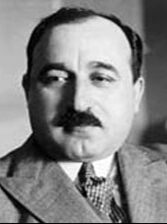
Bogoljub Jevtić
Bogoljub Jevtić was a Prime Minister of Yugoslavia. Born December 24, 1886, in Kragujevac. Died June 7, 1960, in Paris. Positions held include Prime Minister of Yugoslavia. Educated at University of Belgrade Faculty of Law.
Facts
11 facts · 2 confirmed by two sources · 4 cited · 5 from one source
Where this comes from
Papalocal keeps its own record. It started from these sources; what each one said is kept here as it was copied, so a change on their side never changes this page by itself. Tap one to read its version.
What Wikidata says · copied November 18, 2026 · revision 2567669101
- Described as
- Prime Minister of Yugoslavia (1886–1960)
- Born
- December 24, 1886 · 3 references
- Died
- June 7, 1960 · 3 references
- Born in
- Kragujevac · 1 reference
- Died in
- Paris · 1 reference
- Buried in
- Cimetière parisien de Thiais
- Citizen of
- Serbia
- Occupation
- diplomat · 1 reference; politician · 1 reference
- Positions held
- Prime Minister of Yugoslavia
- Political party
- Yugoslav National Party · 1 reference
- Education
- University of Belgrade Faculty of Law
- Wikipedias with a page
- 20
Wikidata item Q772329 (wikidata.org/wiki/Q772329), public domain (CC0). Copied November 18, 2026.
What Wikipedia says · copied November 18, 2026 · revision 1368827016
Bogoljub Jevtić (Serbian Cyrillic: Богољуб Јевтић; 24 December 1886 – 7 June 1960) was a Serbian diplomat and politician in the Kingdom of Yugoslavia.
He was plenipotentiary minister of Yugoslavia in Albania, Austria and Hungary. After the assassination of King Alexander I of Yugoslavia, on 22 December 1934 he was appointed prime minister of Yugoslavia, holding this position until 24 June 1935.
- Born, in its opening lines
- December 24, 1886
- Died, in its opening lines
- June 7, 1960
From the Wikipedia article “Bogoljub Jevtić” (en.wikipedia.org/wiki/Bogoljub_Jevtić), by its contributors, under CC BY-SA 4.0 (creativecommons.org/licenses/by-sa/4.0/). Copied November 18, 2026; not changed.
Confirmed Two sources agree. Cited One source, and it names where it got it. One source One source, without a reference of its own. Sources disagree The sources disagree. We show the best-supported value and keep theirs below.
