
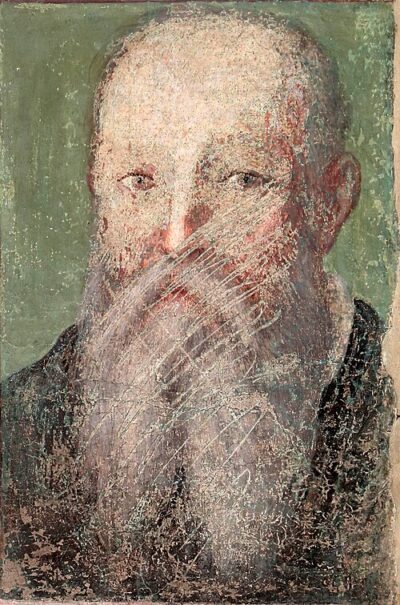
Bronzino
Bronzino was an Italian Mannerist painter. Born November 17, 1503, in Florence. Died November 23, 1572, in Florence. Positions held include court painter (1537–). Known for Deposition of Christ, Portrait of Eleanor of Toledo and her son Giovanni de' Medici and Portrait of Andrea Doria as Neptune.
Facts
28 facts · 2 confirmed by two sources · 10 cited · 16 from one source
Where this comes from
Papalocal keeps its own record. It started from these sources; what each one said is kept here as it was copied, so a change on their side never changes this page by itself. Tap one to read its version.
What Wikidata says · copied November 16, 2026 · revision 2569623064
- Described as
- Italian Mannerist painter (1503-1572)
- Other names
- Agnolo di Cosimo, Angelo Bronzino, Angelo Allori, Agnolo Tori di Cosimo di Mariano Bronzino, Angiolo Bronzino, Agnolo Di Cosimo, Agnolo di Cosimo Bronzino, Agniolo di Cosimo di Mariano Tori Bronzino, Angiolo Allori, Agniolo Bronzino, Agnolo Bronzino Vecchio, Angelo Bronzino Fiorentino
- Born
- November 17, 1503 · 5 references
- Died
- November 23, 1572 · 5 references
- Born in
- Florence · 3 references
- Died in
- Florence · 5 references
- Name at birth
- Agnolo di Cosimo di Mariano
- Occupation
- painter · 4 references; poet · 2 references; architectural drafter · 1 reference
- Positions held
- court painter (1537–) · 1 reference
- Worked for
- Francesco Maria I della Rovere; Cosimo I de' Medici, Grand Duke of Tuscany
- Member of
- Accademia delle Arti del Disegno
- Genre
- portrait painting; nude · 1 reference; mythological painting · 1 reference; religious painting · 2 references; history painting · 2 references
- Known for
- Deposition of Christ; Portrait of Eleanor of Toledo and her son Giovanni de' Medici; Portrait of Andrea Doria as Neptune; Cappella di Eleonora; Eleonora of Toledo; Maria (di Cosimo I) de' Medici · 1 reference; Martyrdom of Saint Lawrence · 1 reference; The Ten Thousand Martyrs · 1 reference; Portrait of the Dwarf Nano Morgante · 1 reference; Andrea Doria as Neptune · 1 reference
- Field
- painting · 1 reference
- Wikipedias with a page
- 64
Wikidata item Q7803 (wikidata.org/wiki/Q7803), public domain (CC0). Copied November 16, 2026.
What Wikipedia says · copied November 16, 2026 · revision 1378952789
Agnolo di Cosimo (Italian: [ˈaɲɲolo di ˈkɔːzimo]; 17 November 1503 – 23 November 1572), usually known as Bronzino (Italian: Il Bronzino [il bronˈdziːno]) or Agnolo Bronzino, was an Italian Mannerist painter from Florence. His sobriquet, Bronzino, may refer to his relatively dark skin or reddish hair.
He lived all his life in Florence, and from his late 30s was kept busy as the court painter of Cosimo I de' Medici, Grand Duke of Tuscany. He was mainly a portraitist, but also painted many religious subjects, and a few allegorical subjects, which include what is probably his best-known work, Venus, Cupid, Folly and Time, c. 1544–45, now in London. Many portraits of the Medicis exist in several versions with varying degrees of participation by Bronzino himself, as Cosimo was a pioneer of the copied portrait sent as a diplomatic gift.
He trained with Pontormo, the leading Florentine painter of the first generation of Mannerism, and his style was greatly influenced by him, but his elegant and somewhat elongated figures always appear calm and somewhat reserved, lacking the agitation and emotion of those by his teacher. They have often been found cold and artificial, and his reputation suffered from the general critical disfavour attached to Mannerism in the 19th and early 20th centuries. Recent decades have been more appreciative of his art.
- Born, in its opening lines
- November 17, 1503
- Died, in its opening lines
- November 23, 1572
From the Wikipedia article “Bronzino” (en.wikipedia.org/wiki/Bronzino), by its contributors, under CC BY-SA 4.0 (creativecommons.org/licenses/by-sa/4.0/). Copied November 16, 2026; not changed.
Confirmed Two sources agree. Cited One source, and it names where it got it. One source One source, without a reference of its own. Sources disagree The sources disagree. We show the best-supported value and keep theirs below.
