
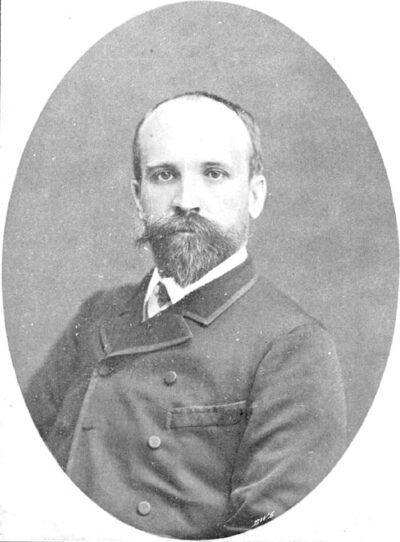
Bruno Abakanowicz
Bruno Abakanowicz was a Polish mathematician. Born October 6, 1852, in Ukmergė. Died August 29, 1900, in Paris. Known for Integraph and spirograph. Educated at Riga Technical University. Awards include Knight of the Legion of Honour.
Facts
18 facts · 2 confirmed by two sources · 5 cited · 11 from one source
Where this comes from
Papalocal keeps its own record. It started from these sources; what each one said is kept here as it was copied, so a change on their side never changes this page by itself. Tap one to read its version.
What Wikidata says · copied November 18, 2026 · revision 2568160255
- Described as
- Polish mathematician (1852-1900)
- Born
- October 6, 1852
- Died
- August 29, 1900
- Born in
- Ukmergė · 1 reference
- Died in
- Paris
- Citizen of
- Russian Empire; Poland
- Occupation
- mathematician · 1 reference; inventor · 1 reference; mathematical instrument maker; electrotechnician · 1 reference
- Worked for
- Lviv Polytechnic · 1 reference
- Education
- Riga Technical University
- Known for
- Integraph (1880) · 1 reference; spirograph (1885) · 2 references
- Awards
- Knight of the Legion of Honour (1889)
- Field
- descriptive geometry; mechanics; mathematical instrument
- Wikipedias with a page
- 22
Wikidata item Q2483013 (wikidata.org/wiki/Q2483013), public domain (CC0). Copied November 18, 2026.
What Wikipedia says · copied November 18, 2026 · revision 1364957109
Bruno Abdank-Abakanowicz (6 October 1852 – 29 August 1900) was a Polish mathematician, inventor, and electrical engineer. He is best known for inventing the integraph and contributing to the development of mathematical instruments and early electrification systems in France.
- Born, in its opening lines
- October 6, 1852
- Died, in its opening lines
- August 29, 1900
From the Wikipedia article “Bruno Abakanowicz” (en.wikipedia.org/wiki/Bruno_Abakanowicz), by its contributors, under CC BY-SA 4.0 (creativecommons.org/licenses/by-sa/4.0/). Copied November 18, 2026; not changed.
Confirmed Two sources agree. Cited One source, and it names where it got it. One source One source, without a reference of its own. Sources disagree The sources disagree. We show the best-supported value and keep theirs below.
