
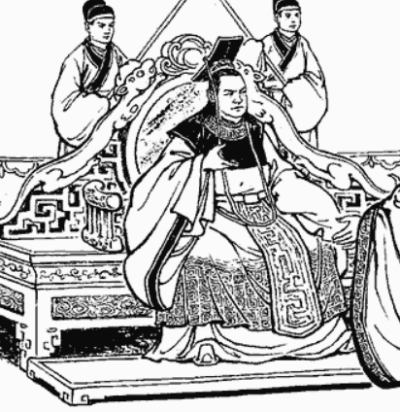
Cao Rui was a Chinese Cao Wei emperor from 226 to 239. Born 205. Died January 22, 239, in Luoyang. Positions held include Emperor of China (226–239).
Facts
27 facts · 0 confirmed by two sources · 2 cited · 25 from one source
Where this comes from
Papalocal keeps its own record. It started from these sources; what each one said is kept here as it was copied, so a change on their side never changes this page by itself. Tap one to read its version.
What Wikidata says · copied November 16, 2026 · revision 2565834794
- Described as
- Chinese Cao Wei emperor from 226 to 239
- Other names
- Tso Yui, Cho Yui, Yuanzhong, Ming Di
- Born
- 205
- Died
- January 22, 239
- Died in
- Luoyang · 1 reference
- Buried in
- Gaoping Tomb
- Citizen of
- Cao Wei · 1 reference
- Occupation
- monarch
- Positions held
- Emperor of China (226–239)
- Spouse
- Empress Mao; Empress Guo
- Children
- Cao Fang · 1 reference; Cao Xun · 1 reference; Cao Ying · 1 reference; Cao Yin · 1 reference; Cao Mu · 1 reference; Shu
- Father
- Cao Pi · 1 reference
- Mother
- Lady Zhen
- Siblings
- Princess Dongxiang; Cao Jie; Cao Rui; Cao Yan; Cao Xie; Cao Li; Cao Gong; Cao Yong; Cao Jian; Cao Lin
- Wikipedias with a page
- 34
Wikidata item Q378470 (wikidata.org/wiki/Q378470), public domain (CC0). Copied November 16, 2026.
What Wikipedia says · copied November 16, 2026 · revision 1384151981
Cao Rui () (204 or 205 – 22 January 239), courtesy name Yuanzhong, was the second emperor of the state of Cao Wei during the Three Kingdoms period. His parentage is in dispute: his mother, Lady Zhen, was Yuan Xi's wife, but she later remarried Cao Pi, the first ruler of Wei. Based on conflicting accounts of his age, Pei Songzhi calculated that, in order to be Cao Pi's son, Cao Rui could not have been 36 (by East Asian age reckoning) when he died as recorded, so the recorded age was in error; late-Qing scholars Lu Bi (卢弼) and Mao Guangsheng (冒广生) argued instead that Cao Rui was Yuan Xi's son.
Cao Rui's reign was viewed in many different ways throughout Chinese history. He devoted many resources into building palaces and ancestral temples, and his reign saw the stalemate between his empire, Shu Han, and Eastern Wu become more entrenched. His building projects and his desire to have many concubines (who numbered in the thousands) greatly exhausted the imperial treasury.
On his deathbed, he had no biological son. He passed the throne to his adopted son Cao Fang and entrusted him to the regency of Cao Shuang and Sima Yi. This would prove to be a fatal mistake for his clan, as Cao Shuang monopolised power and governed incompetently, eventually drawing a violent reaction from Sima Yi, who overthrew him in a coup d'état (Incident at the Gaoping Tombs). Sima Yi became in control of the Wei government from February 249, eventually allowing his grandson Sima Yan to usurp the throne in February 266. After his death, Cao Rui was posthumously honoured as "Emperor Ming" with the temple name "Liezu".
From the Wikipedia article “Cao Rui” (en.wikipedia.org/wiki/Cao_Rui), by its contributors, under CC BY-SA 4.0 (creativecommons.org/licenses/by-sa/4.0/). Copied November 16, 2026; not changed.
Confirmed Two sources agree. Cited One source, and it names where it got it. One source One source, without a reference of its own. Sources disagree The sources disagree. We show the best-supported value and keep theirs below.
