
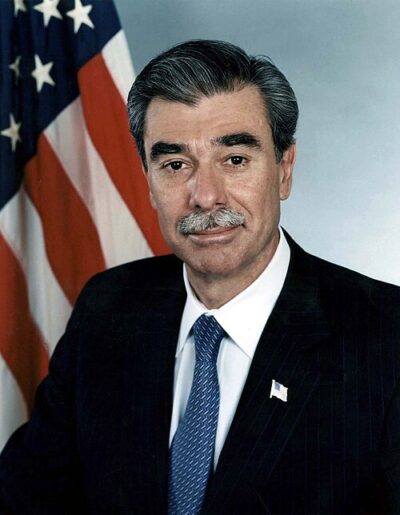
Carlos Gutierrez
Carlos Gutierrez is the 35th United States Secretary of Commerce. Born November 4, 1953, in Havana. Positions held include United States Secretary of Commerce (2005–2009). Educated at Monterrey Institute of Technology and Higher Education. Awards include Ohtli Award and Great Immigrants Award.
Facts
11 facts · 1 confirmed by two sources · 1 cited · 9 from one source
Where this comes from
Papalocal keeps its own record. It started from these sources; what each one said is kept here as it was copied, so a change on their side never changes this page by itself. Tap one to read its version.
What Wikidata says · copied November 16, 2026 · revision 2568289294
- Described as
- 35th United States Secretary of Commerce
- Other names
- Carlos Miguel Gutierrez
- Born
- November 4, 1953 · 1 reference
- Born in
- Havana
- Citizen of
- United States; Cuba
- Occupation
- politician; entrepreneur
- Positions held
- United States Secretary of Commerce (2005–2009) · 1 reference
- Political party
- Republican Party
- Education
- Monterrey Institute of Technology and Higher Education
- Awards
- Ohtli Award (2012); Great Immigrants Award (2007) · 1 reference
- Wikipedias with a page
- 21
Wikidata item Q741648 (wikidata.org/wiki/Q741648), public domain (CC0). Copied November 16, 2026.
What Wikipedia says · copied November 16, 2026 · revision 1368925345
Carlos Miguel Gutierrez (originally Gutiérrez; born November 4, 1953) is an American former CEO and former United States Secretary of Commerce. He is currently a co-founder and executive chairman of EmPath. Gutierrez is a former chairman of the board and CEO of the Kellogg Company. He served as the 35th U.S. Secretary of Commerce from 2005 to 2009.
- Born, in its opening lines
- November 4, 1953
From the Wikipedia article “Carlos Gutierrez” (en.wikipedia.org/wiki/Carlos_Gutierrez), by its contributors, under CC BY-SA 4.0 (creativecommons.org/licenses/by-sa/4.0/). Copied November 16, 2026; not changed.
Confirmed Two sources agree. Cited One source, and it names where it got it. One source One source, without a reference of its own. Sources disagree The sources disagree. We show the best-supported value and keep theirs below.
