
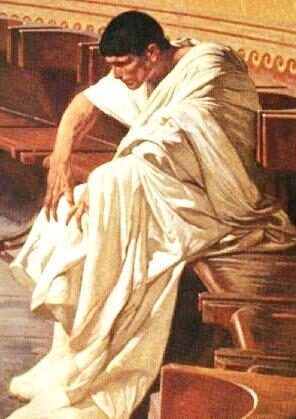
Catiline
Catiline was a Roman politician, senator and soldier (c.108–62 BC). Born 108 BC, in Ancient Rome. Died January 62 BC, in Pistoia. Positions held include ancient Roman senator (–-62), praetors (-68) and Propraetor (-67–-66).
Facts
13 facts · 0 confirmed by two sources · 4 cited · 9 from one source
Where this comes from
Papalocal keeps its own record. It started from these sources; what each one said is kept here as it was copied, so a change on their side never changes this page by itself. Tap one to read its version.
What Wikidata says · copied November 16, 2026 · revision 2569097234
- Described as
- Roman politician, senator and soldier (c.108–62 BC)
- Other names
- Lucius Sergius Catilina, Catilina
- Born
- 108 BC · 1 reference
- Died
- January 62 BC
- Born in
- Ancient Rome
- Died in
- Pistoia
- Citizen of
- Ancient Rome
- Occupation
- politician · 1 reference
- Positions held
- ancient Roman senator (–-62) · 1 reference; praetors (-68); Propraetor (-67–-66)
- Spouse
- Gratidia · 1 reference; Aurelia Orestilla · 1 reference
- Mother
- Belliena
- Siblings
- Sergia
- Wikipedias with a page
- 52
Wikidata item Q75826 (wikidata.org/wiki/Q75826), public domain (CC0). Copied November 16, 2026.
What Wikipedia says · copied November 16, 2026 · revision 1383614516
Lucius Sergius Catilina (c. 108 BC – January 62 BC), known in English as Catiline (), was a Roman politician and soldier best known for instigating the Catilinarian conspiracy, a failed attempt to seize control of the Roman state in 63 BC. Born to an ancient patrician family, he joined Sulla during Sulla's civil war and profited from Sulla's purges of his political enemies, becoming a wealthy man. In the early 60s BC, he served as praetor and then as governor of Africa (67–66 BC). Upon his return to Rome, he attempted to stand for the consulship but was rebuffed; he then was beset with legal challenges over alleged corruption in Africa and his actions during Sulla's proscriptions (83–82 BC). Acquitted on all charges with the support of influential friends in Roman politics, he stood for the consulship in 64 and in 63 BC.
Defeated in the consular comitia, he concocted a plot to take the consulship by force, bringing together poor rural plebs, Sullan veterans, and other senators whose political careers had stalled. Crassus revealed the coup attempt – which involved armed uprisings in Etruria – to Cicero, one of the consuls, in October 63 BC, but it took until November before evidence of Catiline's participation emerged. Discovered, he left the city to join his rebellion. In early January 62 BC, at the head of a rebel army near Pistoria (modern-day Pistoia in Tuscany), Catiline fought the Battle of Pistoria against republican forces. He was killed and his army annihilated.
Catiline's name became a byword for doomed and treasonous rebellion in the years after his death. Sallust, in his monograph on the conspiracy, Bellum Catilinae, painted Catiline as a symbol of the Roman Republic's moral decline, as much of a victim as a perpetrator, as his characterization of "a ravaged mind" (vastus animus) indicates.
From the Wikipedia article “Catiline” (en.wikipedia.org/wiki/Catiline), by its contributors, under CC BY-SA 4.0 (creativecommons.org/licenses/by-sa/4.0/). Copied November 16, 2026; not changed.
Confirmed Two sources agree. Cited One source, and it names where it got it. One source One source, without a reference of its own. Sources disagree The sources disagree. We show the best-supported value and keep theirs below.
