
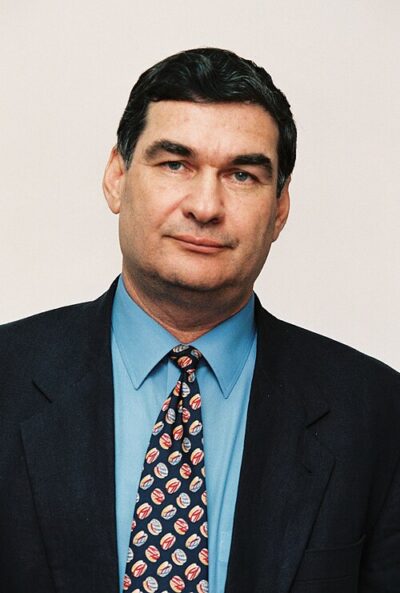
Chaim Ramon is an Israeli politician. Born April 10, 1950, in Jaffa. Positions held include Minister of Health (1992–1994), Minister without portfolio (2005) and Knesset member (1983–2009). Educated at Tel Aviv University.
Facts
17 facts · 1 confirmed by two sources · 8 cited · 8 from one source
Where this comes from
Papalocal keeps its own record. It started from these sources; what each one said is kept here as it was copied, so a change on their side never changes this page by itself. Tap one to read its version.
What Wikidata says · copied November 18, 2026 · revision 2562942580
- Described as
- Israeli politician
- Born
- April 10, 1950 · 1 reference
- Born in
- Jaffa · 1 reference
- Name at birth
- חיים וישניא
- Citizen of
- Israel
- Occupation
- politician · 2 references; lawyer · 1 reference; trade unionist; minister · 1 reference
- Positions held
- Minister of Health (1992–1994) · 1 reference; Minister without portfolio (2005) · 1 reference; Knesset member (1983–2009) · 1 reference; Observer of the Parliamentary Assembly of the Council of Europe (2004) · 1 reference; Justice Minister of Israel (2006) · 1 reference
- Political party
- Kadima
- Education
- Tel Aviv University
- Member of
- Parliamentary Assembly of the Council of Europe (2004)
- Spouse
- Vered Ramon-Rivlin
- Wikipedias with a page
- 20
Wikidata item Q652581 (wikidata.org/wiki/Q652581), public domain (CC0). Copied November 18, 2026.
What Wikipedia says · copied November 18, 2026 · revision 1378143208
Haim Ramon (Hebrew: חיים רמון; born 10 April 1950) is an Israeli politician who served as a member of the Knesset between 1983 and 2009, and as both Vice Prime Minister and Minister in the Prime Minister's Office with responsibility for state policy.
- Born, in its opening lines
- April 10, 1950
From the Wikipedia article “Haim Ramon” (en.wikipedia.org/wiki/Haim_Ramon), by its contributors, under CC BY-SA 4.0 (creativecommons.org/licenses/by-sa/4.0/). Copied November 18, 2026; not changed.
Confirmed Two sources agree. Cited One source, and it names where it got it. One source One source, without a reference of its own. Sources disagree The sources disagree. We show the best-supported value and keep theirs below.
