
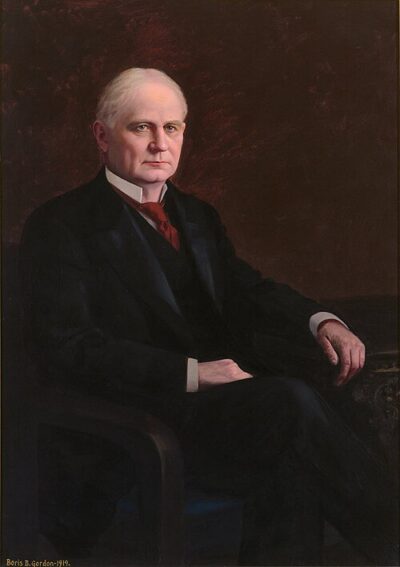
Champ Clark
Champ Clark was an American politician. Born March 7, 1850, in Lawrenceburg. Died March 2, 1921, in Washington, D.C.. Positions held include United States representative (2 times) (1893–1921) and Speaker of the United States House of Representatives (1911–1919). Educated at Bethany College and University of Cincinnati College of Law.
Facts
23 facts · 2 confirmed by two sources · 9 cited · 12 from one source
Where this comes from
Papalocal keeps its own record. It started from these sources; what each one said is kept here as it was copied, so a change on their side never changes this page by itself. Tap one to read its version.
What Wikidata says · copied November 19, 2026 · revision 2571912471
- Described as
- American politician (1850–1921)
- Other names
- James Beauchamp Clark
- Born
- March 7, 1850 · 3 references
- Died
- March 2, 1921 · 3 references
- Born in
- Lawrenceburg
- Died in
- Washington, D.C. · 1 reference
- Buried in
- Bowling Green City Cemetery · 1 reference
- Name at birth
- James Beauchamp Clark
- Citizen of
- United States
- Occupation
- politician · 1 reference; lawyer · 1 reference; jurist · 1 reference; prosecutor · 1 reference
- Positions held
- United States representative (2 times) (1893–1921); Speaker of the United States House of Representatives (1911–1919)
- Political party
- Democratic Party
- Worked for
- Marshall University (1873–1874)
- Education
- Bethany College; University of Cincinnati College of Law
- Spouse
- Genevieve Davis Bennett
- Children
- Bennett Champ Clark; Genevieve Clark Thomson
- Mother
- Aletha Jane Clark · 1 reference
- Lived in
- McBrayer-Clark House · 1 reference; James Beauchamp Clark House (1899–1921) · 1 reference
- Wikipedias with a page
- 14
Wikidata item Q465651 (wikidata.org/wiki/Q465651), public domain (CC0). Copied November 19, 2026.
What Wikipedia says · copied November 19, 2026 · revision 1386335298
James Beauchamp Clark (March 7, 1850 – March 2, 1921) was an American politician and attorney who served as the 36th speaker of the United States House of Representatives from 1911 to 1919. He was the only Democrat to serve as speaker during the Progressive Era when Republicans dominated the House, Senate and presidency. Clark represented Missouri's 9th district between 1893 and 1921.
Born in Kentucky, Clark established a law practice in Bowling Green, Missouri. After serving in local, county and state office, he won election to the U.S. House in 1892, lost his seat in 1894, and won the seat again in 1896. He became the House minority leader in 1908 and was elevated to speaker after Democrats took control of the house in the 1910 elections. He inadvertently helped defeat the Canadian–American Reciprocity Treaty of 1911 by arguing that ratification of the treaty would lead to the incorporation of Canada into the United States.
Entering the 1912 Democratic National Convention, Clark had won the backing of a majority of the delegates, but lacked the necessary two-thirds majority to win the presidential nomination. After dozens of ballots, Woodrow Wilson emerged as the Democratic presidential nominee and later won the 1912 presidential election. Clark helped Wilson pass much of his progressive agenda but opposed American entry into World War I. In the 1918 midterm elections, Democrats lost control of the House of Representatives, ending Clark's tenure as speaker. The 1920 House elections saw the defeat of numerous Democrats, including Clark. He died the following March, two days before he would have left office.
- Born, in its opening lines
- March 7, 1850
- Died, in its opening lines
- March 2, 1921
From the Wikipedia article “Champ Clark” (en.wikipedia.org/wiki/Champ_Clark), by its contributors, under CC BY-SA 4.0 (creativecommons.org/licenses/by-sa/4.0/). Copied November 19, 2026; not changed.
Confirmed Two sources agree. Cited One source, and it names where it got it. One source One source, without a reference of its own. Sources disagree The sources disagree. We show the best-supported value and keep theirs below.
