
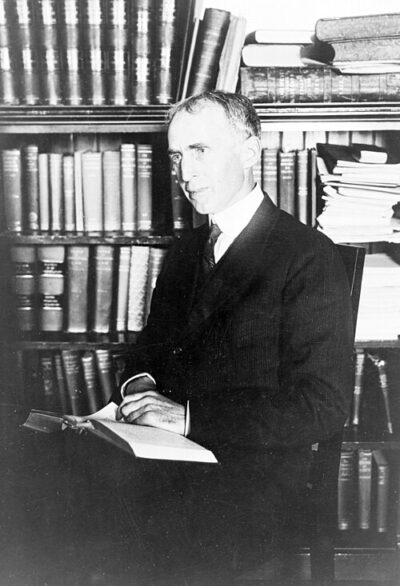
Charles A. Beard
Charles A. Beard was an American historian. Born November 27, 1874, in Knightstown. Died September 1, 1948, in New Haven. Positions held include chairperson (1925–1926). Educated at DePauw University and Columbia University.
Facts
22 facts · 2 confirmed by two sources · 9 cited · 11 from one source
Where this comes from
Papalocal keeps its own record. It started from these sources; what each one said is kept here as it was copied, so a change on their side never changes this page by itself. Tap one to read its version.
What Wikidata says · copied November 15, 2026 · revision 2565538174
- Described as
- American historian (1874-1948)
- Other names
- Charles Austin Beard
- Born
- November 27, 1874 · 9 references
- Died
- September 1, 1948 · 9 references
- Born in
- Knightstown · 1 reference
- Died in
- New Haven · 2 references
- Buried in
- Ferncliff Cemetery · 1 reference
- Citizen of
- United States
- Occupation
- historian of Modern Age; historian · 1 reference; university teacher; peace activist; writer · 1 reference; opinion journalist · 1 reference
- Positions held
- chairperson (1925–1926) · 1 reference
- Worked for
- Columbia University
- Education
- DePauw University (–1898) · 1 reference; Columbia University
- Member of
- American Historical Association; American Academy of Arts and Letters; American Philosophical Society (1936–); Charles and Mary Beard
- Field
- history
- Spouse
- Mary Ritter Beard (1900–1948) · 1 reference
- Wikipedias with a page
- 36
Wikidata item Q719860 (wikidata.org/wiki/Q719860), public domain (CC0). Copied November 15, 2026.
What Wikipedia says · copied November 15, 2026 · revision 1383231679
Charles Austin Beard (November 27, 1874 – September 1, 1948) was an American historian and professor, who wrote primarily during the first half of the 20th century. A history professor at Columbia University, Beard's influence is primarily due to his publications in the fields of history and political science. His works included a radical re-evaluation of the Founding Fathers of the United States, whom he believed to be more motivated by economics than by philosophical principles. Beard's most influential book, An Economic Interpretation of the Constitution of the United States (1913), has been the subject of great controversy ever since its publication. While it has been frequently criticized for its methodology and conclusions, it was responsible for a wide-ranging reinterpretation of early American history.
An icon of the progressive school of historical interpretation, his reputation suffered during the Cold War when analyses of economic class conflict were dropped by most United States historians. The consensus historian Richard Hofstadter concluded in 1968, "Today Beard's reputation stands like an imposing ruin in the landscape of American historiography. What was once the grandest house in the province is now a ravaged survival." The end of Cold War Anticommunism has rekindled scholarly interest in Beard's historical methods and findings, particularly his later work on the domestic economic origins of U.S. foreign policy in the 20th century.
- Born, in its opening lines
- November 27, 1874
- Died, in its opening lines
- September 1, 1948
From the Wikipedia article “Charles A. Beard” (en.wikipedia.org/wiki/Charles_A._Beard), by its contributors, under CC BY-SA 4.0 (creativecommons.org/licenses/by-sa/4.0/). Copied November 15, 2026; not changed.
Confirmed Two sources agree. Cited One source, and it names where it got it. One source One source, without a reference of its own. Sources disagree The sources disagree. We show the best-supported value and keep theirs below.
