
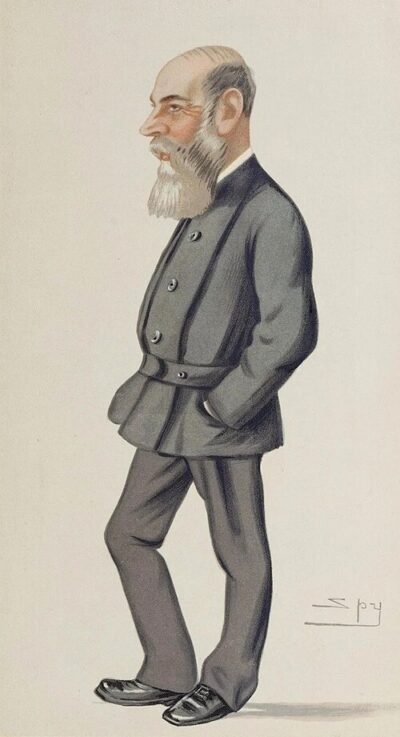
Charles Boycott
Charles Boycott was a British land agent. Born March 12, 1832, in Burgh St Peter. Died June 19, 1897, in Flixton.
Facts
9 facts · 2 confirmed by two sources · 1 cited · 6 from one source
Where this comes from
Papalocal keeps its own record. It started from these sources; what each one said is kept here as it was copied, so a change on their side never changes this page by itself. Tap one to read its version.
What Wikidata says · copied November 17, 2026 · revision 2557836673
- Described as
- British land agent (1832–1897)
- Other names
- Charles Cunningham Boycott, Charles Cunningham Boycatt, Captain Boycott
- Born
- March 12, 1832 · 4 references
- Died
- June 19, 1897 · 4 references
- Born in
- Burgh St Peter · 1 reference
- Died in
- Flixton · 1 reference
- Buried in
- Burgh St Peter · 1 reference
- Citizen of
- United Kingdom of Great Britain and Ireland
- Occupation
- entrepreneur
- Worked for
- John Crichton, 3rd Earl Erne · 1 reference
- Military branch
- British Army
- Wikipedias with a page
- 25
Wikidata item Q455534 (wikidata.org/wiki/Q455534), public domain (CC0). Copied November 17, 2026.
What Wikipedia says · copied November 17, 2026 · revision 1384085247
Captain Charles Cunningham Boycott (12 March 1832 – 19 June 1897) was an English land agent whose ostracism by his local community in Ireland gave the English language the term boycott. He had served in the British Army 39th Foot, which brought him to Ireland. After retiring from the army, Boycott worked as a land agent for Lord Erne, a landowner in the Lough Mask area of County Mayo.
In 1880, as part of a campaign for free sale, fixity of tenure, and fair rent, and specifically in resistance to proposed evictions on the estate, local activists of the Irish National Land League encouraged Boycott's employees, including the seasonal workers required to harvest the crops on Lord Erne's estate, to withdraw their labour, and began a campaign of isolation against Boycott in the local community. Shops in nearby Ballinrobe refused to serve him. Some were threatened with violence to ensure compliance.
Opposition to the campaign against Boycott became a cause célèbre in the British press after he wrote a letter to The Times. Newspapers sent correspondents to County Mayo to highlight what they viewed as the victimisation of a servant of a peer of the realm by Irish nationalists. Fifty Orangemen from County Cavan and County Monaghan travelled to Lord Erne's estate to harvest the crops, while a regiment of the 19th Royal Hussars and more than 1,000 men of the Royal Irish Constabulary (RIC) were deployed to protect the harvesters. The episode was estimated to have cost the British government and others at least £10,000 to harvest about £500 worth of crops.
Boycott left Ireland on 1 December 1880, and in 1886, became land agent for Hugh Adair's Flixton estate in Suffolk. He died at the age of 65 on 19 June 1897 in his home in Flixton, after an illness earlier that year.
- Born, in its opening lines
- March 12, 1832
- Died, in its opening lines
- June 19, 1897
From the Wikipedia article “Charles Boycott” (en.wikipedia.org/wiki/Charles_Boycott), by its contributors, under CC BY-SA 4.0 (creativecommons.org/licenses/by-sa/4.0/). Copied November 17, 2026; not changed.
Confirmed Two sources agree. Cited One source, and it names where it got it. One source One source, without a reference of its own. Sources disagree The sources disagree. We show the best-supported value and keep theirs below.
