
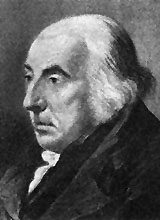
Charles Cameron
Charles Cameron was a Scottish architect. Born June 1, 1745, in London. Died March 19, 1812, in Saint Petersburg. Known for Pavlovsk Museum-Preserve and Pavlovsk Park.
Facts
17 facts · 2 confirmed by two sources · 12 cited · 3 from one source
Where this comes from
Papalocal keeps its own record. It started from these sources; what each one said is kept here as it was copied, so a change on their side never changes this page by itself. Tap one to read its version.
What Wikidata says · copied November 18, 2026 · revision 2555714183
- Described as
- Scottish architect (1745–1812)
- Other names
- Charlz Kameron, Carl Cameron
- Born
- June 1, 1745 · 2 references
- Died
- March 19, 1812 · 4 references
- Born in
- London · 2 references
- Died in
- Saint Petersburg · 2 references
- Citizen of
- Scotland · 1 reference; Kingdom of Great Britain · 6 references
- Occupation
- architect · 8 references; printmaker · 1 reference; copper engraver · 1 reference; draftsperson · 1 reference; book collector · 1 reference; court artist · 1 reference; art collector · 1 reference
- Known for
- Pavlovsk Museum-Preserve; Pavlovsk Park
- Lived in
- Russia · 1 reference; London · 1 reference
- Wikipedias with a page
- 20
Wikidata item Q956467 (wikidata.org/wiki/Q956467), public domain (CC0). Copied November 18, 2026.
What Wikipedia says · copied November 18, 2026 · revision 1372400036
Charles Cameron (c. 1745 – 19 March 1812) was a Scottish architect who made an illustrious career at the court of Catherine II of Russia.
Cameron, a practitioner of early neoclassical architecture, was the chief architect of Tsarskoye Selo and Pavlovsk palaces and the adjacent new town of Sophia from his arrival in Russia in 1779 to Catherine's death in 1796. Cameron concentrated exclusively on country palaces and landscape gardens. Twice dismissed by Paul of Russia during the Battle of the Palaces, Cameron enjoyed a brief revival of his career under Alexander I in 1803–1805. All his indisputable tangible works "can be encompassed in a day's tour".
Cameron's British neoclassicism was an isolated episode in Russian architecture, then dominated by Italian artists (Francesco Rastrelli, Antonio Rinaldi, Giacomo Quarenghi, Vincenzo Brenna, Carlo Rossi, and many others). According to his first biographer Georgy Lukomsky, "Cameron remains one of the greatest exponents of British taste and British Art abroad, and if he has been so completely forgotten in his own country, it would seem only right to rectify this omission".
Howard Colvin ranked Cameron "one of the major urban architects of the eighteenth century ... an accomplished designer and decorator in a neoclassical style that has affinities with that of Robert Adam. His style is sufficiently individual to exonerate him from the imputation of being merely an imitator... Although still a Palladian, Cameron was a pioneer of Greek Revival in Russia." Apart from the well-researched Catherinian period (1779–1796), Cameron's life story remains poorly documented, not in the least due to Cameron's own efforts to shake off the bad reputation he had earned in the 1770s in London
- Born, in its opening lines
- c. 1745
- Died, in its opening lines
- March 19, 1812
From the Wikipedia article “Charles Cameron (architect)” (en.wikipedia.org/wiki/Charles_Cameron_(architect)), by its contributors, under CC BY-SA 4.0 (creativecommons.org/licenses/by-sa/4.0/). Copied November 18, 2026; not changed.
Confirmed Two sources agree. Cited One source, and it names where it got it. One source One source, without a reference of its own. Sources disagree The sources disagree. We show the best-supported value and keep theirs below.
