
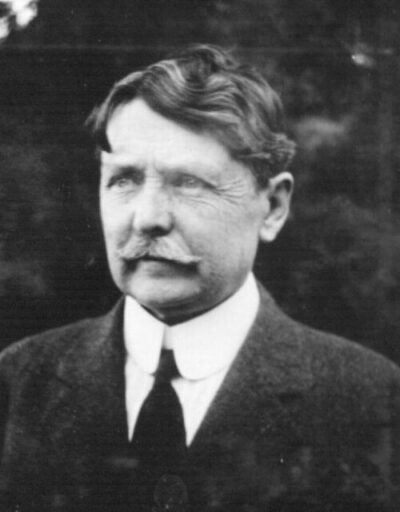
Charles Dillon Perrine
Charles Dillon Perrine was an American astronomer. Born July 28, 1867, in Steubenville. Died June 21, 1951, in Córdoba. Awards include Lalande Prize.
Facts
11 facts · 2 confirmed by two sources · 3 cited · 6 from one source
Where this comes from
Papalocal keeps its own record. It started from these sources; what each one said is kept here as it was copied, so a change on their side never changes this page by itself. Tap one to read its version.
What Wikidata says · copied November 15, 2026 · revision 2567524072
- Described as
- American astronomer (1867-1951)
- Born
- July 28, 1867
- Died
- June 21, 1951
- Born in
- Steubenville · 1 reference
- Died in
- Córdoba · 1 reference
- Citizen of
- United States; Argentina
- Occupation
- astronomer · 1 reference
- Worked for
- Lick Observatory; Argentine National Observatory
- Awards
- Lalande Prize (1897)
- Field
- astronomy
- Wikipedias with a page
- 27
Wikidata item Q279202 (wikidata.org/wiki/Q279202), public domain (CC0). Copied November 15, 2026.
What Wikipedia says · copied November 15, 2026 · revision 1384718402
Charles Dillon Perrine (July 28, 1867 – June 21, 1951) was an American astronomer at the Lick Observatory in California (1893-1909) who moved to Cordoba, Argentina to accept the position of Director of the Argentine National Observatory (1909-1936). The Cordoba Observatory under Perrine's direction made the first attempts to prove Einstein's theory of relativity by astronomical observation of the deflection of starlight near the Sun during the solar eclipse of October 10, 1912 in Cristina (Brazil), and the solar eclipse of August 21, 1914 at Feodosia, Crimea, Russian Empire. Rain in 1912 and clouds in 1914 prevented results.
In 1897 he was awarded the Lalande Prize and gold medal by the Paris Academy of Sciences given each year "to the person who makes the most outstanding observation ... to further the progress of Astronomy, in France or elsewhere.". He served as president of the Astronomical Society of the Pacific in 1902, was elected an Associate of the Royal Astronomical Society in 1904, and was awarded the gold medal of the Mexican Astronomical Society in 1905. In the same year he received the degree of Doctor of Sciences (honorary) from Santa Clara College (today Santa Clara University).
A crater on the far side of the Moon was named in his honor in 1970.
- Born, in its opening lines
- July 28, 1867
- Died, in its opening lines
- June 21, 1951
From the Wikipedia article “Charles Dillon Perrine” (en.wikipedia.org/wiki/Charles_Dillon_Perrine), by its contributors, under CC BY-SA 4.0 (creativecommons.org/licenses/by-sa/4.0/). Copied November 15, 2026; not changed.
Confirmed Two sources agree. Cited One source, and it names where it got it. One source One source, without a reference of its own. Sources disagree The sources disagree. We show the best-supported value and keep theirs below.
