
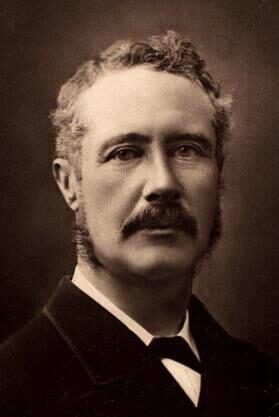
Charles George Gordon
Charles George Gordon was a British army officer and administrator. Born January 28, 1833, in Woolwich. Died January 26, 1885, in Khartoum. Awards include Companion of the Order of the Bath, Knight of the Legion of Honour and Imperial yellow jacket.
Facts
21 facts · 2 confirmed by two sources · 4 cited · 14 from one source · 1 where the sources disagree
What’s different
- Buried in: we show St Paul's Cathedral (Sources disagree). Wikidata also lists Khartoum
Where this comes from
Papalocal keeps its own record. It started from these sources; what each one said is kept here as it was copied, so a change on their side never changes this page by itself. Tap one to read its version.
What Wikidata says · copied November 16, 2026 · revision 2564644674
- Described as
- British army officer and administrator
- Other names
- Chinese Gordon, Gordon Pasha, "Chinese" Gordon, Major-General Charles George Gordon, CB, charles george gordon, C. G. Gordon, Ge Deng, Gordon of Khartoum, cha er si‧ qiao zhi ‧ ge deng, General Charles George Gordon
- Born
- January 28, 1833 · 10 references
- Died
- January 26, 1885 · 10 references
- Born in
- Woolwich · 1 reference
- Died in
- Khartoum · 1 reference
- Buried in
- St Paul's Cathedral; Khartoum
- Cause of death
- decapitation
- Citizen of
- United Kingdom of Great Britain and Ireland
- Occupation
- engineer; military officer; colonial administrator; military personnel
- Awards
- Companion of the Order of the Bath; Knight of the Legion of Honour; Imperial yellow jacket; 4th class, Order of the Medjidie
- Father
- Henry William Gordon
- Mother
- Elizabeth Enderby · 1 reference
- Siblings
- Henry Gordon
- Military branch
- British Army
- Military rank
- major general; general · 1 reference
- Wikipedias with a page
- 48
Wikidata item Q310035 (wikidata.org/wiki/Q310035), public domain (CC0). Copied November 16, 2026.
What Wikipedia says · copied November 16, 2026 · revision 1384963083
Major-General Charles George Gordon CB (28 January 1833 – 26 January 1885), also known as Chinese Gordon, Gordon Pasha, Gordon of Khartoum and General Gordon, was a British Army officer and administrator. He saw action in the Crimean War as an officer in the British Army. He made his military reputation in China, where he was placed in command of the "Ever Victorious Army", a force of Chinese soldiers led by European officers that was instrumental in putting down the Taiping Rebellion, regularly defeating much larger forces. For these accomplishments, he was given the nickname "Chinese Gordon" and honours from both the Emperor of China and the British.
He entered the service of the Khedive of Egypt in 1873 (with British government approval) and later became the Governor-General of the Sudan, where he did much to suppress revolts and the local slave trade. He resigned and returned to Europe in 1880.
A serious revolt broke out in the Sudan, led by a Muslim religious leader and self-proclaimed Mahdi, Muhammad Ahmad. In early 1884, Gordon was sent to Khartoum with instructions to secure the evacuation of loyal soldiers and civilians and to depart with them. In defiance of those instructions, after evacuating about 2,500 civilians, he retained a smaller group of soldiers and non-military men. In the months before the fall of Khartoum, Gordon and Muhammad Ahmad corresponded; Gordon offered him the sultanate of Kordofan and Ahmad invited Gordon to convert to Islam and join him, which Gordon declined. Besieged by the Ahmad's forces, Gordon organised a citywide defence that lasted for almost a year. This gained him the admiration of the British public, but not of the government, which had not wanted him to become entrenched there. Only when public pressure to act had become irresistible did the government, with reluctance, send a relief force. It arrived two days after the city had fallen and Gordon had been killed.
- Born, in its opening lines
- January 28, 1833
- Died, in its opening lines
- January 26, 1885
From the Wikipedia article “Charles George Gordon” (en.wikipedia.org/wiki/Charles_George_Gordon), by its contributors, under CC BY-SA 4.0 (creativecommons.org/licenses/by-sa/4.0/). Copied November 16, 2026; not changed.
Confirmed Two sources agree. Cited One source, and it names where it got it. One source One source, without a reference of its own. Sources disagree The sources disagree. We show the best-supported value and keep theirs below.
