
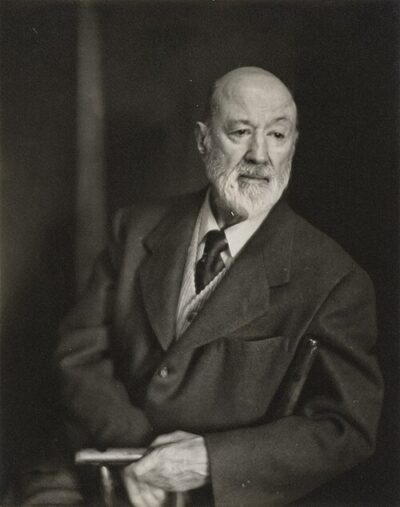
Charles Ives
Charles Ives was an American modernist composer. Born October 20, 1874, in Danbury. Died May 19, 1954, in New York City. Known for Variations on "America" and Symphony No. 3. Teams include Yale Bulldogs football. Educated at Yale University and Harvard University. Awards include Pulitzer Prize for Music.
Facts
22 facts · 2 confirmed by two sources · 8 cited · 12 from one source
Where this comes from
Papalocal keeps its own record. It started from these sources; what each one said is kept here as it was copied, so a change on their side never changes this page by itself. Tap one to read its version.
What Wikidata says · copied November 13, 2026 · revision 2565531777
- Described as
- American modernist composer (1874–1954)
- Other names
- Charles Edward Ives
- Born
- October 20, 1874 · 16 references
- Died
- May 19, 1954 · 15 references
- Born in
- Danbury · 1 reference
- Died in
- New York City · 3 references
- Buried in
- Wooster Cemetery · 1 reference
- Citizen of
- United States
- Occupation
- actuary; composer · 1 reference
- Education
- Yale University; Harvard University · 1 reference; Hopkins School · 1 reference
- Member of
- American Academy of Arts and Letters
- Teams
- Yale Bulldogs football
- Genre
- symphony
- Instrument
- pipe organ
- Known for
- Variations on "America"; Symphony No. 3
- Awards
- Pulitzer Prize for Music (1947) · 1 reference
- Spouse
- Harmony Twichell Ives · 1 reference
- Father
- George Ives · 1 reference
- Mother
- Mary Elizabeth Parmelee · 1 reference
- Website
- https://charlesives.org
- Wikipedias with a page
- 48
Wikidata item Q309648 (wikidata.org/wiki/Q309648), public domain (CC0). Copied November 13, 2026.
What Wikipedia says · copied November 13, 2026 · revision 1381137707
Charles Edward Ives (; October 20, 1874 – May 19, 1954) was an American modernist composer, actuary and businessman. Ives was among the earliest renowned American composers to achieve recognition on a global scale. His music was largely ignored during his early career, and many of his works went unperformed for many years. Later in life, the quality of his music was publicly recognized through the efforts of contemporaries like Henry Cowell and Lou Harrison, and he came to be regarded as an "American original".
Ives was also among the first composers to engage in a systematic program of experimental music, with musical techniques including polytonality, polyrhythm, tone clusters, aleatory elements, and quarter tones. The experimentation foreshadowed many musical innovations that were later more widely adopted during the 20th century; hence, Ives is often regarded as the leading American composer of art music of the 20th century.
Sources of Ives's tonal imagery included hymn tunes and traditional songs; he also incorporated melodies of town bands at holiday parades, the fiddlers at Saturday night dances, patriotic songs, sentimental parlor ballads, and the melodies of Stephen Foster.
- Born, in its opening lines
- October 20, 1874
- Died, in its opening lines
- May 19, 1954
From the Wikipedia article “Charles Ives” (en.wikipedia.org/wiki/Charles_Ives), by its contributors, under CC BY-SA 4.0 (creativecommons.org/licenses/by-sa/4.0/). Copied November 13, 2026; not changed.
Confirmed Two sources agree. Cited One source, and it names where it got it. One source One source, without a reference of its own. Sources disagree The sources disagree. We show the best-supported value and keep theirs below.
