
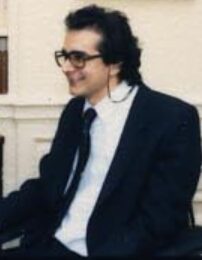
Charles Krauthammer
Charles Krauthammer was an American journalist. Born March 13, 1950, in Manhattan. Died June 21, 2018, in Washington, D.C.. Educated at Balliol College and Harvard Medical School. Awards include Pulitzer Prize for Commentary, Irving Kristol Award and Eric Breindel Award for Excellence in Opinion Journalism.
Facts
28 facts · 2 confirmed by two sources · 14 cited · 12 from one source
Where this comes from
Papalocal keeps its own record. It started from these sources; what each one said is kept here as it was copied, so a change on their side never changes this page by itself. Tap one to read its version.
What Wikidata says · copied November 15, 2026 · revision 2546591178
- Described as
- American journalist (1950-2018)
- Other names
- Irving Charles Krauthammer
- Born
- March 13, 1950 · 1 reference
- Died
- June 21, 2018
- Born in
- Manhattan · 1 reference
- Died in
- Washington, D.C.
- Buried in
- Adas Israel Cemetery · 1 reference
- Cause of death
- small intestine cancer · 1 reference
- Citizen of
- United States
- Occupation
- physician · 3 references; columnist · 3 references; pundit; psychiatrist · 3 references; writer · 2 references; journalist · 1 reference; opinion journalist · 1 reference; speechwriter
- Political party
- Democratic Party
- Education
- Balliol College; Harvard Medical School; McGill University
- Awards
- Pulitzer Prize for Commentary (1987) · 1 reference; Irving Kristol Award (2004) · 1 reference; Eric Breindel Award for Excellence in Opinion Journalism
- Field
- opinion journalism · 1 reference; psychiatry · 1 reference; politics · 1 reference
- Lived in
- Montreal; New York City
- Website
- https://www.charleskrauthammer.com/
- Wikipedias with a page
- 29
Wikidata item Q1065216 (wikidata.org/wiki/Q1065216), public domain (CC0). Copied November 15, 2026.
What Wikipedia says · copied November 15, 2026 · revision 1381912368
Charles Krauthammer (; March 13, 1950 – June 21, 2018) was an American political columnist and psychiatrist. A conservative pundit, Krauthammer won the Pulitzer Prize for his columns in The Washington Post in 1987. His weekly column was syndicated to more than 400 publications worldwide.
While in his first year studying medicine at Harvard Medical School, Krauthammer became permanently paralyzed from the waist down after a diving board accident that severed his spinal cord at cervical spinal nerve 5. After spending 14 months recovering in a hospital, he returned to medical school, graduating to become a psychiatrist involved in the creation of the Diagnostic and Statistical Manual of Mental Disorders III in 1980. He joined the Carter administration in 1978 as a director of psychiatric research, eventually becoming the speechwriter to Vice President Walter Mondale in 1980.
In the late 1970s and early 1980s, Krauthammer embarked on a career as a columnist and political commentator. In 1985, he began writing a weekly column for The Washington Post, which earned him the 1987 Pulitzer Prize for Commentary for his "witty and insightful columns on national issues". He was a weekly panelist on the PBS news program Inside Washington from 1990 until it ceased production in December 2013. Krauthammer had been a contributing editor to The Weekly Standard, a Fox News contributor, and a nightly panelist on Special Report with Bret Baier on Fox News.
Krauthammer received acclaim for his writing on foreign policy, among other matters. He was a leading conservative voice and proponent of United States military and political engagement on the global stage, coining the term Reagan Doctrine and advocating both the Gulf War and the Iraq War. In August 2017, due to his battle with cancer, Krauthammer stopped writing his column and serving as a Fox News contributor. He died on June 21, 2018.
- Born, in its opening lines
- March 13, 1950
- Died, in its opening lines
- June 21, 2018
From the Wikipedia article “Charles Krauthammer” (en.wikipedia.org/wiki/Charles_Krauthammer), by its contributors, under CC BY-SA 4.0 (creativecommons.org/licenses/by-sa/4.0/). Copied November 15, 2026; not changed.
Confirmed Two sources agree. Cited One source, and it names where it got it. One source One source, without a reference of its own. Sources disagree The sources disagree. We show the best-supported value and keep theirs below.
