
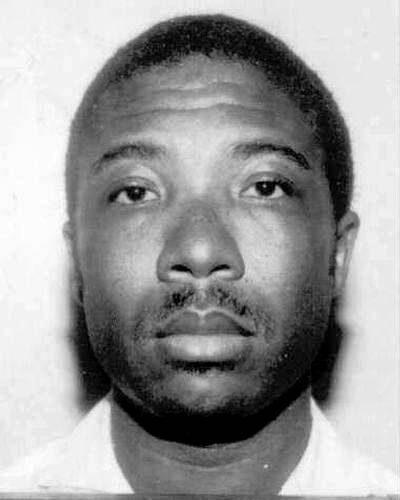
Charles Taylor
Charles Taylor is the 22nd president of Liberia. Born January 28, 1948, in Arthington. Positions held include President of Liberia (1997–2003). Educated at Bentley University and The Newman School. Awards include Order of African Redemption, Order of the Pioneers of Liberia and Order of the Star of Africa.
Facts
17 facts · 1 confirmed by two sources · 2 cited · 14 from one source
Where this comes from
Papalocal keeps its own record. It started from these sources; what each one said is kept here as it was copied, so a change on their side never changes this page by itself. Tap one to read its version.
What Wikidata says · copied November 16, 2026 · revision 2567961884
- Described as
- 22nd president of Liberia
- Other names
- Charles McArthur Ghankay Taylor
- Born
- January 28, 1948 · 3 references
- Born in
- Arthington
- Citizen of
- Liberia
- Occupation
- politician · 1 reference; warlord · 1 reference
- Positions held
- President of Liberia (1997–2003)
- Political party
- National Patriotic Party
- Education
- Bentley University; The Newman School
- Awards
- Order of African Redemption; Order of the Pioneers of Liberia; Order of the Star of Africa
- Spouse
- Jewel Taylor (1997–2006) · 1 reference
- Children
- Chuckie Taylor
- Religion
- Protestantism
- Military branch
- Armed Forces of Liberia
- Military rank
- commanding officer
- Wikipedias with a page
- 55
Wikidata item Q49090 (wikidata.org/wiki/Q49090), public domain (CC0). Copied November 16, 2026.
What Wikipedia says · copied November 16, 2026 · revision 1384320538
Charles McArthur Ghankay Taylor (born 28 January 1948) is a Liberian former politician. He served as the 22nd president of Liberia from 2 August 1997 until his resignation on 11 August 2003 as a result of the Second Liberian Civil War and growing international pressure. After leaving office, he was found guilty of war crimes committed in the Sierra Leone Civil War, and was sentenced to 50 years in prison.
Born in Arthington, Montserrado County, Liberia, Taylor earned an economics degree at Bentley College in the United States before returning to Liberia to work in the government of Samuel Doe. After being removed for embezzlement and imprisoned by President Doe, Taylor escaped prison in 1985. He eventually arrived in Libya, where he was trained as a guerrilla fighter. He returned to Liberia in 1989 as the head of a Libyan-backed rebel group, the National Patriotic Front of Liberia, to overthrow the Doe government, initiating the First Liberian Civil War (1989–1996). Following Doe's execution, Taylor gained control of a large portion of the country and became one of the most prominent warlords in Africa. His forces, along with those of other rival warlords such as ULIMO, were notorious for committing widespread human rights abuses and atrocities during the civil war. Following a peace deal that ended the war, Taylor was elected president in the 1997 general election as a member of the National Patriotic Party (NPP).
During his term in office, Taylor was accused of war crimes and crimes against humanity as a result of his support for the Revolutionary United Front (RUF) rebel group in the Sierra Leone Civil War (1991–2002). Domestically, Taylor attempted to consolidate power through dictatorial means such as by purging the military and committing violence against his political rivals, including an assassination attempt of former ULIMO commander Roosevelt Johnson, leading to violent clashes in Monrovia in 1998. As a result, opposition to his government grew, culminating in the outbreak of the Second Liberian Civil War in 1999. By 2003, Taylor had lost control of much of the countryside and was formally indicted by the Special Court for Sierra Leone. That year, he resigned as a result of growing international pressure and went into exile in Nigeria. In 2006, the newly elected president of Liberia, Ellen Johnson Sirleaf, formally requested his extradition. He was detained by UN authorities in Sierra Leone and then at the Penitentiary Institution Haaglanden in The Hague, awaiting trial by the Special Court. He was found guilty in April 2012 of all eleven charges levied by the Special Court, including terror, murder, and rape.
In May 2012, Taylor was sentenced to 50 years in prison. Reading the sentencing statement, presiding Judge Richard Lussick said: "The accused has been found responsible for aiding and abetting as well as planning some of the most heinous and brutal crimes in recorded human history."
- Born, in its opening lines
- January 28, 1948
From the Wikipedia article “Charles Taylor (Liberian politician)” (en.wikipedia.org/wiki/Charles_Taylor_(Liberian_politician)), by its contributors, under CC BY-SA 4.0 (creativecommons.org/licenses/by-sa/4.0/). Copied November 16, 2026; not changed.
Confirmed Two sources agree. Cited One source, and it names where it got it. One source One source, without a reference of its own. Sources disagree The sources disagree. We show the best-supported value and keep theirs below.
