
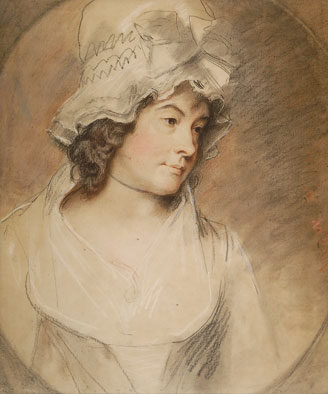
Charlotte Turner Smith
Charlotte Turner Smith was an English poet, novelist. Born May 4, 1749, in London. Died October 28, 1806, in Tilford. Known for Emmeline, Celestina. A novel. In four volumes. By Charlotte Smith. and Desmond.
Facts
27 facts · 2 confirmed by two sources · 12 cited · 13 from one source
Where this comes from
Papalocal keeps its own record. It started from these sources; what each one said is kept here as it was copied, so a change on their side never changes this page by itself. Tap one to read its version.
What Wikidata says · copied November 18, 2026 · revision 2565603711
- Described as
- English poet, novelist (1749–1806)
- Other names
- Charlotte Smith, Charlotte Turner
- Born
- May 4, 1749 · 8 references
- Died
- October 28, 1806 · 8 references
- Born in
- London · 2 references
- Died in
- Tilford
- Citizen of
- United Kingdom of Great Britain and Ireland · 1 reference; Kingdom of Great Britain (–1801)
- Occupation
- poet · 1 reference; writer · 1 reference; novelist · 1 reference; botanist · 1 reference
- Known for
- Emmeline · 1 reference; Celestina. A novel. In four volumes. By Charlotte Smith.; Desmond; Beachy Head: with Other Poems; Conversations Introducing Poetry, Chiefly on Subjects of Natural History, for the Use of Young Persons; Elegiac Sonnets; Letters of a Solitary Wanderer; Marchmont; Minor Morals; Montalbert
- Field
- poetry
- Spouse
- Benjamin Smith (1765–) · 1 reference
- Children
- Augusta Smith · 1 reference; William Towers Smith · 1 reference; Sir Lionel Smith, 1st Baronet · 1 reference
- Father
- Nicholas Turner · 1 reference
- Siblings
- Catherine Ann Dorset · 1 reference
- Wikipedias with a page
- 22
Wikidata item Q442902 (wikidata.org/wiki/Q442902), public domain (CC0). Copied November 18, 2026.
What Wikipedia says · copied November 18, 2026 · revision 1383231801
Charlotte Smith (née Turner; (1749-05-04)4 May 1749 – (1806-10-28)28 October 1806) was an English novelist and poet of the School of Sensibility whose Elegiac Sonnets (1784) contributed to the revival of the form in England. She also helped to set conventions for Gothic fiction and wrote political novels of sensibility. Despite her eleven novels, four children's books and other works, she saw herself mainly as a poet and expected to be remembered for that.
Smith left her husband and began writing to support their children. Her struggles for legal independence as a woman affect her poetry, novels and autobiographical prefaces. She is credited with turning the sonnet into an expression of woeful sentiment and her early novels show development in sentimentality. Later novels such as Desmond (1792) and The Old Manor House (1793) praised the ideals of the French Revolution. Waning interest left her destitute by 1803. Barely able to hold a pen, she sold her book collection to pay debts and died in 1806. Her poem Beachy Head (1807) was published posthumously. Largely forgotten by the mid-19th century, she has since been seen as a major Romantic precursor.
- Born, in its opening lines
- May 4, 1749
- Died, in its opening lines
- October 28, 1806
From the Wikipedia article “Charlotte Smith (writer)” (en.wikipedia.org/wiki/Charlotte_Smith_(writer)), by its contributors, under CC BY-SA 4.0 (creativecommons.org/licenses/by-sa/4.0/). Copied November 18, 2026; not changed.
Confirmed Two sources agree. Cited One source, and it names where it got it. One source One source, without a reference of its own. Sources disagree The sources disagree. We show the best-supported value and keep theirs below.
