
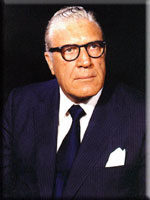
Clarence M. Kelley
Clarence M. Kelley was a Director of the FBI. Born October 24, 1911, in Kansas City. Died August 5, 1997, in Kansas City. Positions held include Director of the Federal Bureau of Investigation (1973–1978). Educated at University of Missouri–Kansas City and University of Kansas.
Facts
15 facts · 2 confirmed by two sources · 0 cited · 13 from one source
Where this comes from
Papalocal keeps its own record. It started from these sources; what each one said is kept here as it was copied, so a change on their side never changes this page by itself. Tap one to read its version.
What Wikidata says · copied November 19, 2026 · revision 2508605329
- Described as
- Director of the FBI (1911–1997)
- Born
- October 24, 1911 · 2 references
- Died
- August 5, 1997 · 2 references
- Born in
- Kansas City
- Died in
- Kansas City
- Citizen of
- United States
- Occupation
- special agent; civil servant
- Positions held
- Director of the Federal Bureau of Investigation (1973–1978)
- Political party
- Republican Party
- Worked for
- Federal Bureau of Investigation (2 times) (1940–1978); Kansas City Police Department (1961–1973)
- Education
- University of Missouri–Kansas City; University of Kansas; Northeast High School · 1 reference
- Religion
- Christian Church (Disciples of Christ)
- Wikipedias with a page
- 10
Wikidata item Q447179 (wikidata.org/wiki/Q447179), public domain (CC0). Copied November 19, 2026.
What Wikipedia says · copied November 19, 2026 · revision 1352056879
Clarence Marion Kelley (October 24, 1911 – August 5, 1997) was an American law enforcement officer. He served as the Chief of the Kansas City Police Department in Kansas City, Missouri, from 1961 to 1973, and as the second director of the Federal Bureau of Investigation from 1973 to 1978.
- Born, in its opening lines
- October 24, 1911
- Died, in its opening lines
- August 5, 1997
From the Wikipedia article “Clarence M. Kelley” (en.wikipedia.org/wiki/Clarence_M._Kelley), by its contributors, under CC BY-SA 4.0 (creativecommons.org/licenses/by-sa/4.0/). Copied November 19, 2026; not changed.
Confirmed Two sources agree. Cited One source, and it names where it got it. One source One source, without a reference of its own. Sources disagree The sources disagree. We show the best-supported value and keep theirs below.
