
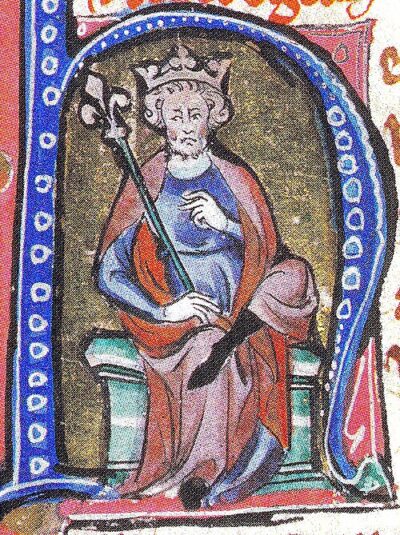
Cnut the Great
Cnut the Great was the 11th-century King of Denmark, Norway, and England. Born 994, in Denmark. Died November 12, 1035, in Shaftesbury. Positions held include Monarch of England (1016–1035), Monarch of Denmark (1018–1035) and Monarch of Norway (1028–1035).
Facts
27 facts · 1 confirmed by two sources · 12 cited · 13 from one source · 1 where the sources disagree
What’s different
- Born: we show 994 (Sources disagree). Wikipedia says c. 995
Where this comes from
Papalocal keeps its own record. It started from these sources; what each one said is kept here as it was copied, so a change on their side never changes this page by itself. Tap one to read its version.
What Wikidata says · copied November 16, 2026 · revision 2569183262
- Described as
- 11th-century King of Denmark, Norway, and England
- Other names
- Canute the Dane, Canute II Sveynsson, King of England and Denmark, Canute, the Dane, Cnut, Canute
- Born
- 994 · 1 reference
- Died
- November 12, 1035 · 1 reference
- Born in
- Denmark
- Died in
- Shaftesbury · 1 reference
- Buried in
- Winchester Cathedral
- Citizen of
- Kingdom of Denmark; North Sea Empire
- Occupation
- monarch; writer · 1 reference
- Positions held
- Monarch of England (1016–1035); Monarch of Denmark (1018–1035); Monarch of Norway (1028–1035)
- Spouse
- Ælfgifu of Northampton · 2 references; Emma of Normandy (1017–) · 2 references
- Children
- Svein Knutsson · 1 reference; Harold Harefoot · 3 references; Harthacanute · 2 references; Gunhilda of Denmark · 1 reference; unknown daughter (?) · 1 reference
- Father
- Swein Forkbeard · 2 references
- Mother
- Gunhild of Wenden · 2 references
- Siblings
- Gyda Svendsdatter · 1 reference; Estrid Svendsdatter; Harald II of Denmark; Olof Skötkonung
- Religion
- Christianity · 1 reference; Old Norse religion
- Wikipedias with a page
- 78
Wikidata item Q134128 (wikidata.org/wiki/Q134128), public domain (CC0). Copied November 16, 2026.
What Wikipedia says · copied November 16, 2026 · revision 1381414256
Cnut ( kə-NYOOT; Old Norse: Knútr; c. 995 – 12 November 1035), also known as Canute and with the epithet the Great, was King of England from 1016, King of Denmark from 1018, and King of Norway from 1028 until his death in 1035. The three kingdoms united under Cnut's rule are referred to together as the North Sea Empire by historians.
As a Danish prince, Cnut won the throne of England in 1016 in the wake of centuries of Viking activity in northwestern Europe. His later accession to the Danish throne in 1018 brought the crowns of England and Denmark together. Cnut sought to keep this power base by uniting Danes and English under cultural bonds of wealth and custom. After a decade of conflict with opponents in Scandinavia, Cnut claimed the crown of Norway in Trondheim in 1028. In 1031, Malcolm II of Scotland also submitted to him, though Anglo-Norse influence over Scotland was weak and ultimately did not last to the time of Cnut's death.
Dominion of England lent the Danes an important link to the maritime zone between the islands of Great Britain and Ireland, where Cnut, like his father before him, had a strong interest and wielded much influence among the Norse–Gaels. Cnut's possession of England's dioceses and the continental Diocese of Denmark – with a claim laid upon it by the Holy Roman Empire's Archdiocese of Hamburg-Bremen – was a source of great prestige and leverage among the magnates of Christendom (gaining notable concessions such as one on the price of the pallium of his bishops, though they still had to travel to obtain the pallium, as well as on the tolls his people had to pay on the way to Rome). After his 1026 victory against Norway and Sweden, and on his way back from Rome where he attended the coronation of the Holy Roman Emperor, Cnut deemed himself "King of all England and Denmark and the Norwegians and of some of the Swedes" in a letter written for the benefit of his subjects. Medieval historian Norman Cantor called him "the most effective king in Anglo-Saxon history".
He is popularly invoked in the context of the legend of King Canute and the tide.
- Born, in its opening lines
- c. 995
- Died, in its opening lines
- November 12, 1035
From the Wikipedia article “Cnut” (en.wikipedia.org/wiki/Cnut), by its contributors, under CC BY-SA 4.0 (creativecommons.org/licenses/by-sa/4.0/). Copied November 16, 2026; not changed.
Confirmed Two sources agree. Cited One source, and it names where it got it. One source One source, without a reference of its own. Sources disagree The sources disagree. We show the best-supported value and keep theirs below.
