
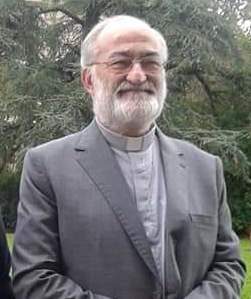
Cristóbal López Romero
Cristóbal López Romero is a cardinal. Born May 19, 1952, in Vélez-Rubio. Positions held include Roman Catholic Archbishop of Rabat (2018–2026), cardinal priest (2019–) and apostolic administrator (2019–). Educated at Autonomous University of Barcelona.
Facts
10 facts · 1 confirmed by two sources · 4 cited · 5 from one source
Where this comes from
Papalocal keeps its own record. It started from these sources; what each one said is kept here as it was copied, so a change on their side never changes this page by itself. Tap one to read its version.
What Wikidata says · copied November 17, 2026 · revision 2570029087
- Described as
- cardinal (1952-)
- Born
- May 19, 1952
- Born in
- Vélez-Rubio
- Citizen of
- Spain
- Occupation
- Catholic priest (1979–) · 1 reference; Catholic bishop (2018–)
- Positions held
- Roman Catholic Archbishop of Rabat (2018–2026) · 2 references; cardinal priest (2019–) · 1 reference; apostolic administrator (2019–) · 1 reference
- Education
- Autonomous University of Barcelona · 1 reference
- Religion
- Catholic Church · 1 reference
- Wikipedias with a page
- 27
Wikidata item Q47001633 (wikidata.org/wiki/Q47001633), public domain (CC0). Copied November 17, 2026.
What Wikipedia says · copied November 17, 2026 · revision 1379727977
Cristóbal López Romero (born 19 May 1952) is a Spanish prelate of the Catholic Church who has served as the Archbishop of Rabat since 2018. He is a member of the Salesians and before becoming a bishop was devoted to pastoral work in Latin America and administrative responsibilities in his order. Pope Francis made him a cardinal in 2019. He was accused of sexual misconduct by five women in 2026.
- Born, in its opening lines
- May 19, 1952
From the Wikipedia article “Cristóbal López Romero” (en.wikipedia.org/wiki/Cristóbal_López_Romero), by its contributors, under CC BY-SA 4.0 (creativecommons.org/licenses/by-sa/4.0/). Copied November 17, 2026; not changed.
Confirmed Two sources agree. Cited One source, and it names where it got it. One source One source, without a reference of its own. Sources disagree The sources disagree. We show the best-supported value and keep theirs below.
