
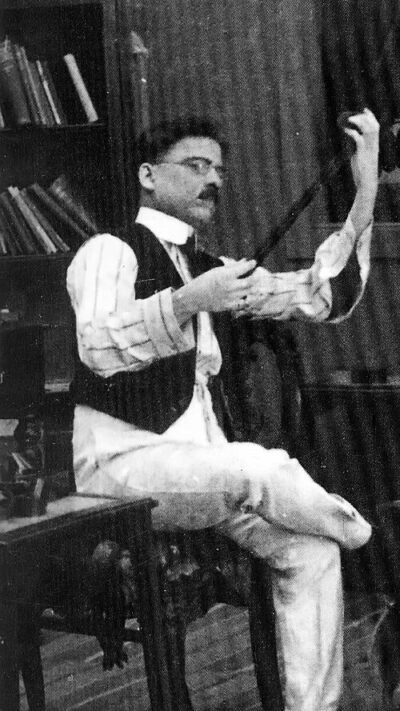
Dadasaheb Phalke
Dadasaheb Phalke was an Indian film producer, director and screenwriter. Born April 30, 1870, in Nashik. Died February 16, 1944, in Nashik. Known for How Films Are Made, Raja Harishchandra and Lanka Dahan. Educated at Sir Jamsetjee Jeejebhoy School of Art and Maharaja Sayajirao University of Baroda.
Facts
20 facts · 0 confirmed by two sources · 2 cited · 18 from one source
Where this comes from
Papalocal keeps its own record. It started from these sources; what each one said is kept here as it was copied, so a change on their side never changes this page by itself. Tap one to read its version.
What Wikidata says · copied November 16, 2026 · revision 2558950303
- Described as
- Indian film producer, director and screenwriter (1870–1944)
- Other names
- Dhundiraj Govind Phalke, father of Indian cinema, Dada Phalke
- Born
- April 30, 1870 · 2 references
- Died
- February 16, 1944 · 2 references
- Born in
- Nashik
- Died in
- Nashik
- Citizen of
- British Raj
- Occupation
- film director; film producer; screenwriter; film editor
- Education
- Sir Jamsetjee Jeejebhoy School of Art; Maharaja Sayajirao University of Baroda · 1 reference
- Known for
- How Films Are Made; Raja Harishchandra; Lanka Dahan; Satyavan Savitri; Mohini Bhasmasur; Shri Krishna Janma; Buddhadev; Setu Bandhan; Gangavataran
- Wikipedias with a page
- 41
Wikidata item Q512431 (wikidata.org/wiki/Q512431), public domain (CC0). Copied November 16, 2026.
What Wikipedia says · copied November 16, 2026 · revision 1377985342
Dhundiraj Govind Phalke, popularly known as Dadasaheb Phalke, was an Indian producer, director and screenwriter, widely regarded as "the Father of Indian cinema".
Phalke’s debut film, Raja Harishchandra (1913), was the first Indian motion picture and is recognised as India's first full-length Indian historical feature film on Satyavadi Raja Harishchandra. The movie’s success marked the beginning of Indian cinema and inspired the growth of the film industry in the country.
Over his career spanning nearly two decades, Phalke made 94 feature-length films and 27 short films between 1913 and 1937. His most notable works include Mohini Bhasmasur (1913), Satyavan Savitri (1914), Lanka Dahan (1917), Shri Krishna Janma (1918), and Kaliya Mardan (1919). He was known for his creativity, technical innovation and ability to adapt Indian historical stories for the screen, often handling multiple departments such as editing, set design and makeup himself.In recognition of his contributions to Indian cinema, the Government of India instituted the Dadasaheb Phalke Award in his honour. It remains the highest award in Indian cinema, presented annually as part of the National Film Awards to honour lifetime achievement in filmmaking.
From the Wikipedia article “Dadasaheb Phalke” (en.wikipedia.org/wiki/Dadasaheb_Phalke), by its contributors, under CC BY-SA 4.0 (creativecommons.org/licenses/by-sa/4.0/). Copied November 16, 2026; not changed.
Confirmed Two sources agree. Cited One source, and it names where it got it. One source One source, without a reference of its own. Sources disagree The sources disagree. We show the best-supported value and keep theirs below.
