
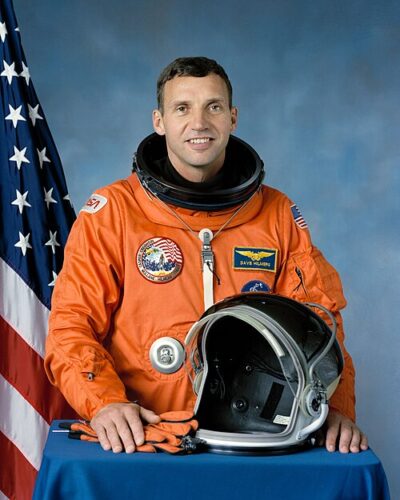
David C. Hilmers is an American astronaut. Born January 28, 1950, in Clinton. Educated at Naval Postgraduate School and Cornell College. Awards include NASA Distinguished Service Medal.
Facts
14 facts · 1 confirmed by two sources · 1 cited · 12 from one source
Where this comes from
Papalocal keeps its own record. It started from these sources; what each one said is kept here as it was copied, so a change on their side never changes this page by itself. Tap one to read its version.
What Wikidata says · copied November 16, 2026 · revision 2513516558
- Described as
- American astronaut
- Other names
- David Carl Hilmers
- Born
- January 28, 1950
- Born in
- Clinton
- Citizen of
- United States
- Occupation
- military officer; astronaut; engineer; physician
- Worked for
- National Aeronautics and Space Administration
- Education
- Naval Postgraduate School; Cornell College
- Awards
- NASA Distinguished Service Medal (1992) · 1 reference
- Military branch
- United States Marine Corps
- Military rank
- Colonel; colonel · 1 reference
- Wikipedias with a page
- 22
Wikidata item Q1173930 (wikidata.org/wiki/Q1173930), public domain (CC0). Copied November 16, 2026.
What Wikipedia says · copied November 16, 2026 · revision 1379143533
David Carl Hilmers (born January 28, 1950) is a former NASA astronaut who flew four Space Shuttle missions. He was born in Clinton, Iowa, but considers DeWitt, Iowa, to be his hometown. He has two grown sons. His recreational interests include playing the piano, gardening, electronics, spending time with his family, and all types of sports. His parents are deceased. With five academic degrees, he is the second most formally educated U.S. astronaut, behind Story Musgrave and Lee Morin with six.
- Born, in its opening lines
- January 28, 1950
From the Wikipedia article “David C. Hilmers” (en.wikipedia.org/wiki/David_C._Hilmers), by its contributors, under CC BY-SA 4.0 (creativecommons.org/licenses/by-sa/4.0/). Copied November 16, 2026; not changed.
Confirmed Two sources agree. Cited One source, and it names where it got it. One source One source, without a reference of its own. Sources disagree The sources disagree. We show the best-supported value and keep theirs below.
