
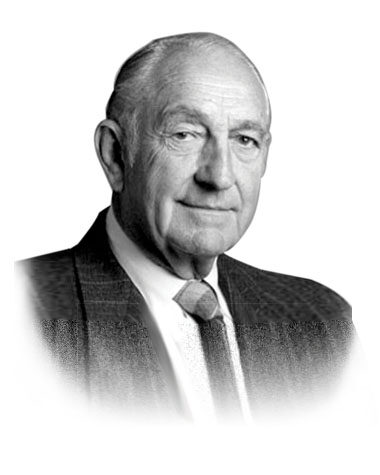
David Packard
David Packard was an American electrical engineer, businessman, and philanthropist. Born September 7, 1912, in Pueblo. Died March 26, 1996, in Stanford. Positions held include United States Deputy Secretary of Defense (1969–1971). Educated at Stanford University and Centennial High School. Awards include Lemelson–MIT Prize, National Medal of Technology and Innovation and Presidential Medal of Freedom.
Facts
36 facts · 2 confirmed by two sources · 12 cited · 22 from one source
Where this comes from
Papalocal keeps its own record. It started from these sources; what each one said is kept here as it was copied, so a change on their side never changes this page by itself. Tap one to read its version.
What Wikidata says · copied November 14, 2026 · revision 2563892946
- Described as
- American electrical engineer, businessman, and philanthropist (1912–1996)
- Born
- September 7, 1912 · 5 references
- Died
- March 26, 1996 · 6 references
- Born in
- Pueblo
- Died in
- Stanford
- Buried in
- Palo Alto
- Citizen of
- United States
- Occupation
- entrepreneur · 1 reference; engineer; computer scientist
- Positions held
- United States Deputy Secretary of Defense (1969–1971)
- Worked for
- Hewlett-Packard; General Electric
- Education
- Stanford University (–1938); Centennial High School
- Member of
- American Academy of Arts and Sciences; Phi Beta Kappa Society; American Philosophical Society · 1 reference
- Awards
- Lemelson–MIT Prize (1995); National Medal of Technology and Innovation (1988) · 1 reference; Presidential Medal of Freedom (1988) · 1 reference; John Fritz Medal (1982) · 1 reference; California Hall of Fame (2006); Hoover Medal (1974); Henry Laurence Gantt Medal (1969); Francis Boyer Award (1986) · 1 reference; NAS Public Welfare Medal (1989) · 1 reference; IEEE Founders Medal (1973) · 1 reference; Heinz Award (1996) · 1 reference; Washington Award (1975) · 1 reference; Bower Award for Business Leadership (1996) · 2 references
- Spouse
- Lucile Salter (1938–1987)
- Children
- Julie Packard; David Woodley Packard; Susan Packard Orr; Nancy Packard Burnett
- Father
- Sperry Packard · 1 reference
- Wikipedias with a page
- 40
Wikidata item Q380484 (wikidata.org/wiki/Q380484), public domain (CC0). Copied November 14, 2026.
What Wikipedia says · copied November 14, 2026 · revision 1380983076
David Packard ( PAK-ərd; September 7, 1912 – March 26, 1996) was an American electrical engineer and co-founder, with Bill Hewlett, of Hewlett-Packard (1939), serving as president (1947–64), CEO (1964–68), and chairman of the board (1964–68, 1972–93) of HP. He served as U.S. Deputy Secretary of Defense from 1969 to 1971 during the Nixon administration. Packard served as president of the Uniformed Services University of the Health Sciences (USU) from 1976 to 1981 and chairman of its board of regents from 1973 to 1982.
He was a member of the Trilateral Commission. Packard was the recipient of the Presidential Medal of Freedom in 1988 and is noted for many technological innovations and philanthropic endeavors.
- Born, in its opening lines
- September 7, 1912
- Died, in its opening lines
- March 26, 1996
From the Wikipedia article “David Packard” (en.wikipedia.org/wiki/David_Packard), by its contributors, under CC BY-SA 4.0 (creativecommons.org/licenses/by-sa/4.0/). Copied November 14, 2026; not changed.
Confirmed Two sources agree. Cited One source, and it names where it got it. One source One source, without a reference of its own. Sources disagree The sources disagree. We show the best-supported value and keep theirs below.
