
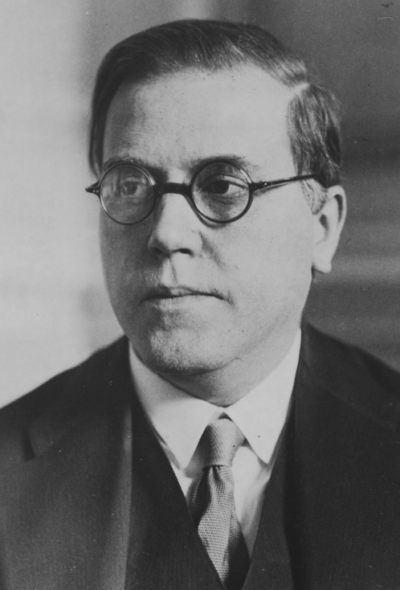
Dietrich von Hildebrand
Dietrich von Hildebrand was a German Catholic philosopher and theologian. Born October 12, 1889, in Florence. Died January 26, 1977, in New York City. Educated at University of Göttingen and LMU Munich.
Facts
23 facts · 2 confirmed by two sources · 10 cited · 10 from one source · 1 where the sources disagree
What’s different
- Died in: we show New York City (Sources disagree). Wikidata also lists New Rochelle
Where this comes from
Papalocal keeps its own record. It started from these sources; what each one said is kept here as it was copied, so a change on their side never changes this page by itself. Tap one to read its version.
What Wikidata says · copied November 17, 2026 · revision 2569051999
- Described as
- German Catholic philosopher and theologian (1889–1977)
- Other names
- Dietrich Richard Alfred von Hildebrand
- Born
- October 12, 1889 · 6 references
- Died
- January 26, 1977 · 2 references
- Born in
- Florence · 1 reference
- Died in
- New Rochelle; New York City · 1 reference
- Citizen of
- Germany
- Occupation
- writer; theologian · 1 reference; university teacher; philosopher · 2 references; resistance fighter; sociologist · 2 references; ethicist · 1 reference; philosopher of religion · 1 reference
- Worked for
- LMU Munich; Fordham University · 1 reference
- Education
- University of Göttingen; LMU Munich
- Field
- Catholic philosophy · 1 reference; sociology · 1 reference; ethics · 1 reference
- Spouse
- Alice von Hildebrand (1959–)
- Father
- Adolf von Hildebrand · 1 reference
- Religion
- Catholicism
- Wikipedias with a page
- 26
Wikidata item Q14678 (wikidata.org/wiki/Q14678), public domain (CC0). Copied November 17, 2026.
What Wikipedia says · copied November 17, 2026 · revision 1384914730
Dietrich Richard Alfred von Hildebrand (German: [ˈhɪldəbʁant]; 12 October 1889 – 26 January 1977) was a German Catholic philosopher and religious writer.
Hildebrand was called "the twentieth-century Doctor of the Church" by Pope Pius XII. He was a leading philosopher in the realist phenomenological and personalist movements, producing works in every major field of philosophy, including ethics, metaphysics, epistemology, philosophical anthropology, social philosophy, and aesthetics. Pope John Paul II greatly admired the philosophical work of Hildebrand, remarking once to his widow, Alice von Hildebrand, "Your husband is one of the great ethicists of the twentieth century." Pope Benedict XVI also had a particular admiration and regard for Hildebrand, who knew Ratzinger as a young priest in Munich: "When the intellectual history of the Catholic Church in the twentieth century is written, the name of Dietrich von Hildebrand will be most prominent among the figures of our time."
Hildebrand is known for his consistent, public opposition to Nazism before and during World War II.
- Born, in its opening lines
- October 12, 1889
- Died, in its opening lines
- January 26, 1977
From the Wikipedia article “Dietrich von Hildebrand” (en.wikipedia.org/wiki/Dietrich_von_Hildebrand), by its contributors, under CC BY-SA 4.0 (creativecommons.org/licenses/by-sa/4.0/). Copied November 17, 2026; not changed.
Confirmed Two sources agree. Cited One source, and it names where it got it. One source One source, without a reference of its own. Sources disagree The sources disagree. We show the best-supported value and keep theirs below.
