
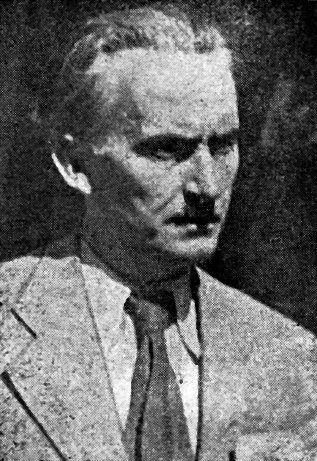
Dimitrije Ljotić
Dimitrije Ljotić was a Serbian fascist politician. Born August 12, 1891, in Belgrade. Died April 22, 1945, in Ajdovščina. Educated at University of Belgrade Faculty of Law.
Facts
12 facts · 1 confirmed by two sources · 3 cited · 7 from one source · 1 where the sources disagree
What’s different
- Died: we show April 22, 1945 (Sources disagree). Wikipedia says April 23, 1945
Where this comes from
Papalocal keeps its own record. It started from these sources; what each one said is kept here as it was copied, so a change on their side never changes this page by itself. Tap one to read its version.
What Wikidata says · copied November 18, 2026 · revision 2567283444
- Described as
- Serbian fascist politician (1891-1945)
- Born
- August 12, 1891
- Died
- April 22, 1945
- Born in
- Belgrade
- Died in
- Ajdovščina · 1 reference
- Cause of death
- traffic collision
- Citizen of
- Serbia
- Occupation
- politician · 1 reference; lawyer · 1 reference
- Political party
- Yugoslav National Movement
- Education
- University of Belgrade Faculty of Law
- Field
- politics · 1 reference
- Religion
- Eastern Orthodoxy
- Wikipedias with a page
- 22
Wikidata item Q725863 (wikidata.org/wiki/Q725863), public domain (CC0). Copied November 18, 2026.
What Wikipedia says · copied November 18, 2026 · revision 1385236589
Dimitrije Ljotić (Serbian Cyrillic: Димитрије Љотић; 12 August 1891 – 23 April 1945) was a Serbian and Yugoslav clerical-fascist politician and ideologue who established the Yugoslav National Movement (Zbor) in 1935 and collaborated with Nazi authorities in German-occupied Serbia during World War II.
He joined the Serbian Army with the outbreak of the Balkan Wars, fought on the Serbian side during World War I and remained in active service until 1920, when he decided to pursue a career in politics. He joined the People's Radical Party that year and became regional deputy for the Smederevo District in 1930. In 1931, he was appointed to the position of Yugoslav Minister of Justice by King Alexander I but resigned following a disagreement between him and the king over the layout of the Yugoslav political system. Ljotić founded Zbor in 1935. The party received little support from the largely anti-German Serbian public and never won more than 1 percent of the vote in the 1935 and 1938 Yugoslav parliamentary elections. Ljotić was arrested in the run-up to the latter elections and briefly sent to an insane asylum after the authorities accused him of having a "religious mania". He voiced his opposition to the Cvetković–Maček Agreement in 1939 and his supporters reacted to it violently. Zbor was soon outlawed by the Yugoslav government, forcing Ljotić into hiding. He remained in hiding until April 1941, when the Axis powers invaded Yugoslavia. Ljotić was later invited by the Germans to join the Serbian puppet government of Milan Aćimović and was offered the position of economic commissioner. He never took office, partly because he disliked the idea of playing a secondary role in the administration and partly because of his unpopularity. He resorted to indirectly exerting his influence over the Serbian puppet government through two of his closest associates whom the Germans had selected as commissioners. In September 1941, the Germans gave Ljotić permission to form the Serbian Volunteer Detachments, which were later renamed the Serbian Volunteer Corps (SDK).
Ljotić was publicly denounced as a traitor by the Yugoslav government-in-exile and Chetnik leader Draža Mihailović in July 1942. He and other Serbian collaborationist officials left Belgrade in October 1944 and made their way to Slovenia, from where they intended to launch an assault against the Independent State of Croatia (NDH). Between March and April, Ljotić and Mihailović agreed to a last-ditch alliance against the Communist-led Yugoslav Partisans and their forces came together under the command of Chetnik General Miodrag Damjanović on 27 March.
Ljotić was killed in an automobile accident on 23 April and was buried in Šempeter pri Gorici. His funeral service was jointly conducted by Bishop Nikolaj Velimirović and Serbian Orthodox Patriarch Gavrilo Dožić, whose release from the Dachau concentration camp Ljotić had secured the previous December. In early May, Damjanović led the SDK–Chetnik formations under his command into northwestern Italy, where they surrendered to the British and were placed in detainment camps. Many were later extradited to Yugoslavia, where several thousand were executed by the Partisans and buried in mass graves in the Kočevski Rog plateau. Others immigrated to the west, where they established émigré organizations intended to promote Zbor's political agenda. The antagonism between these groups and those affiliated with the Chetniks continued in exile.
- Born, in its opening lines
- August 12, 1891
- Died, in its opening lines
- April 23, 1945
From the Wikipedia article “Dimitrije Ljotić” (en.wikipedia.org/wiki/Dimitrije_Ljotić), by its contributors, under CC BY-SA 4.0 (creativecommons.org/licenses/by-sa/4.0/). Copied November 18, 2026; not changed.
Confirmed Two sources agree. Cited One source, and it names where it got it. One source One source, without a reference of its own. Sources disagree The sources disagree. We show the best-supported value and keep theirs below.
