
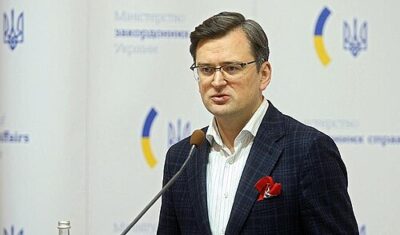
Dmytro Kuleba
Dmytro Kuleba is an Ukrainian diplomat and politician. Born April 19, 1981, in Sumy. Positions held include Ukrainian Minister of Foreign Affairs (2020–2024), Deputy Prime Minister for European and Euro-Atlantic Integration of Ukraine (2019–2020) and advisory board. Educated at Institute of International Relations of Taras Ševčenko National University of Kjiv. Awards include Order of Merit (Ukraine), 3rd class.
Facts
21 facts · 1 confirmed by two sources · 9 cited · 11 from one source
Where this comes from
Papalocal keeps its own record. It started from these sources; what each one said is kept here as it was copied, so a change on their side never changes this page by itself. Tap one to read its version.
What Wikidata says · copied November 16, 2026 · revision 2567281161
- Described as
- Ukrainian diplomat and politician (born 1981)
- Other names
- Dmytro Ivanovich Kuleba, Dmytro Ivanovych Kuleba, Kuleba Dmytro
- Born
- April 19, 1981 · 1 reference
- Born in
- Sumy · 2 references
- Citizen of
- Ukraine; Soviet Union (–1991)
- Occupation
- diplomat · 1 reference; politician · 1 reference; foreign minister · 1 reference; blogger · 1 reference
- Positions held
- Ukrainian Minister of Foreign Affairs (2020–2024) · 2 references; Deputy Prime Minister for European and Euro-Atlantic Integration of Ukraine (2019–2020) · 1 reference; advisory board
- Political party
- Servant of the People · 1 reference
- Worked for
- Taras Shevchenko National University of Kyiv
- Education
- Institute of International Relations of Taras Ševčenko National University of Kjiv
- Awards
- Order of Merit (Ukraine), 3rd class · 1 reference
- Field
- diplomat · 1 reference; diplomacy · 1 reference; politics · 1 reference
- Spouse
- Yevheniia Kuleba
- Father
- Ivan Kuleba
- Religion
- Ukrainian Orthodox Church (Moscow Patriarchate)
- Wikipedias with a page
- 61
Wikidata item Q24025631 (wikidata.org/wiki/Q24025631), public domain (CC0). Copied November 16, 2026.
What Wikipedia says · copied November 16, 2026 · revision 1378333019
Dmytro Ivanovych Kuleba (Ukrainian: Дмитро Іванович Кулеба [dmɪˈtrɔ iˈwɑnɔwɪtʃ kʊˈlɛbɐ]; born 19 April 1981) is a Ukrainian politician and diplomat who served as Minister of Foreign Affairs. He was concurrently a member of the National Defense and Security Council of Ukraine.
The youngest foreign affairs minister in Ukraine's history (after Arseniy Yatsenyuk), he previously worked as Deputy Prime Minister of Ukraine for European and Euro-Atlantic Integration and Permanent Representative of Ukraine to the Council of Europe between 2016 and 2019.
On 4 September 2024, he resigned as Minister of Foreign Affairs amidst a cabinet shuffle.
- Born, in its opening lines
- April 19, 1981
From the Wikipedia article “Dmytro Kuleba” (en.wikipedia.org/wiki/Dmytro_Kuleba), by its contributors, under CC BY-SA 4.0 (creativecommons.org/licenses/by-sa/4.0/). Copied November 16, 2026; not changed.
Confirmed Two sources agree. Cited One source, and it names where it got it. One source One source, without a reference of its own. Sources disagree The sources disagree. We show the best-supported value and keep theirs below.
