
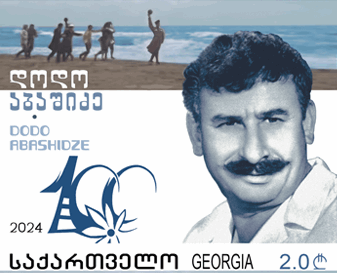
Dodo Abashidze
Dodo Abashidze was a Georgian Soviet actor and director. Born May 1, 1924, in Tbilisi. Died January 26, 1990, in Tbilisi. Educated at Shota Rustaveli Theatre and Film University. Awards include Nika Award, Honored Artist of Georgian SSR and People's artist of the Georgian SSR.
Facts
23 facts · 2 confirmed by two sources · 3 cited · 18 from one source
Where this comes from
Papalocal keeps its own record. It started from these sources; what each one said is kept here as it was copied, so a change on their side never changes this page by itself. Tap one to read its version.
What Wikidata says · copied November 18, 2026 · revision 2539149533
- Described as
- Georgian Soviet actor and director (1924–1990)
- Other names
- David Abashidze, Davit Abashidze
- Born
- May 1, 1924 · 1 reference
- Died
- January 26, 1990 · 1 reference
- Born in
- Tbilisi
- Died in
- Tbilisi
- Buried in
- Didube Pantheon
- Citizen of
- Soviet Union
- Occupation
- film director; stage actor; film actor · 1 reference; actor · 1 reference
- Political party
- Communist Party of the Soviet Union (1960–)
- Worked for
- Rustaveli Theatre; Georgian Film Studio
- Education
- Shota Rustaveli Theatre and Film University (1949–)
- Awards
- Nika Award (1990); Honored Artist of Georgian SSR (1961); People's artist of the Georgian SSR (1967); Shota Rustaveli State Prize (1992) · 1 reference; Order of the Red Banner of Labour (1976); Order of the Badge of Honour (1966) · 1 reference; Sitges Film Festival Best Director award (1986)
- Father
- Vaniko Abashidze
- Mother
- Nino Andronikashvili
- Wikipedias with a page
- 20
Wikidata item Q2622599 (wikidata.org/wiki/Q2622599), public domain (CC0). Copied November 18, 2026.
What Wikipedia says · copied November 18, 2026 · revision 1367357629
David 'Dodo' Abashidze (Georgian: დავით [დოდო] აბაშიძე; Russian: Дави́д Ива́нович Абаши́дзе; 1 May 1924 – 26 January 1990) was a Soviet Georgian actor and film director. He was named People’s Artist of Georgia in 1967. After his death a Tbilisi street was named in his honor. He appeared in 50 films between 1954 and 1988.
Abashidze studied at the Shota Rustaveli Theater Institute in Tbilisi, graduating in 1949. He then joined the troupe of the Rustaveli Theater but after a few years dedicated himself fully to cinema. Abashidze’s film debut was the role of Bichiko in Siko Dolidze’s comedy The Dragonfly (1954, from Nikoloz Baratashvili’s Marine), which became a box-office hit throughout the USSR. Over the following three decades, the actor worked with all leading directors of Georgian cinema and worked in a variety of genres ranging from historical adventure to contemporary drama and musical comedy. Tengiz Abuladze and Revaz Chkheidze cast him in their successful joint debut Magdana’s Donkey (1955), Otar Ioseliani in Falling Leaves (1966), Eldar Shengelaia in Unusual Exhibition (1968), and Georgi Danelia in Don't Grieve (1969). Another notable role was of the shepherd Sosana who resists urban modernization in The Grand Green Valley (1968).
One of Abashidze's greatest achievements was the co-direction of two pictures with Sergei Paradjanov: The Legend of Suram Fortress (1984) and Ashik Kerib (1988), where he also acted as well.
- Born, in its opening lines
- May 1, 1924
- Died, in its opening lines
- January 26, 1990
From the Wikipedia article “Dodo Abashidze” (en.wikipedia.org/wiki/Dodo_Abashidze), by its contributors, under CC BY-SA 4.0 (creativecommons.org/licenses/by-sa/4.0/). Copied November 18, 2026; not changed.
Confirmed Two sources agree. Cited One source, and it names where it got it. One source One source, without a reference of its own. Sources disagree The sources disagree. We show the best-supported value and keep theirs below.
