
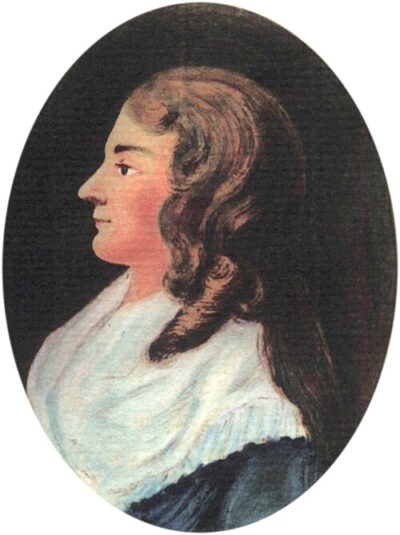
Dorothea Christiane Erxleben
Dorothea Christiane Erxleben was a physician. Born November 13, 1715, in Quedlinburg. Died June 13, 1762, in Quedlinburg. Educated at Martin Luther University Halle-Wittenberg.
Facts
14 facts · 2 confirmed by two sources · 8 cited · 4 from one source
Where this comes from
Papalocal keeps its own record. It started from these sources; what each one said is kept here as it was copied, so a change on their side never changes this page by itself. Tap one to read its version.
What Wikidata says · copied November 16, 2026 · revision 2569213520
- Described as
- physician (1715–1762)
- Other names
- Dorothea Erxleben, Dorothea Christiane Leporin
- Born
- November 13, 1715 · 3 references
- Died
- June 13, 1762 · 3 references
- Born in
- Quedlinburg · 1 reference
- Died in
- Quedlinburg · 1 reference
- Name at birth
- Dorothea Christiane Leporin · 1 reference
- Citizen of
- Holy Roman Empire
- Occupation
- physician · 1 reference
- Worked for
- Martin Luther University Halle-Wittenberg
- Education
- Martin Luther University Halle-Wittenberg
- Field
- health sciences · 1 reference
- Spouse
- Johann Christian Erxleben · 1 reference
- Children
- Johann Christian Polycarp Erxleben · 1 reference; Johann Heinrich Christian Erxleben · 1 reference
- Father
- Christian Polycarp Leporin · 1 reference
- Wikipedias with a page
- 37
Wikidata item Q62931 (wikidata.org/wiki/Q62931), public domain (CC0). Copied November 16, 2026.
What Wikipedia says · copied November 16, 2026 · revision 1386095196
Dorothea Christiane Erxleben (13 November 1715 – 13 June 1762) was a German medical doctor who became the first woman doctor of medicine in Germany.
Educated by her progressive physician father and rector of her school, she desired to attend medical school and study medicine like her brother. She eventually petitioned Frederick the Great of Prussia to allow her entry into the University of Halle. Despite a Royal permission to attend, Erxleben never entered University. When her cousin died, leaving five children, she decided in 1741, at the age of 26, to look after them, married widower Johann Christian Erxleben and went on to have four children with him.
In 1747, due to economic constraints, the mother of nine children began to practice medicine in Quedlinburg without a degree, and became highly respected by the towns people. However, local physicians who felt their monopoly on medical services was threatened filed a lawsuit, charging her with medical quackery. In January 1754, the king ruled that Erxleben would have to pass an examination and submit a dissertation at the University of Halle. Her inaugural dissertation was titled Concerning the Swift and Pleasant but for that Reason less than Full Cure of Illnesses, in which she argued against the prophylactic use of strong laxative, purgatives and perspiratory agents as it was practiced at that time. She pointed out that doctors were too quick to prescribe unnecessary cures like opiates for illnesses that did not require them and made suggestions regarding their correct usage and dosage, as well as best interventions to promote menstruation and urination. She spent another 8 years practicing medicine in her hometown of Quedlinburg until she died of breast cancer.
- Born, in its opening lines
- November 13, 1715
- Died, in its opening lines
- June 13, 1762
From the Wikipedia article “Dorothea Erxleben” (en.wikipedia.org/wiki/Dorothea_Erxleben), by its contributors, under CC BY-SA 4.0 (creativecommons.org/licenses/by-sa/4.0/). Copied November 16, 2026; not changed.
Confirmed Two sources agree. Cited One source, and it names where it got it. One source One source, without a reference of its own. Sources disagree The sources disagree. We show the best-supported value and keep theirs below.
