
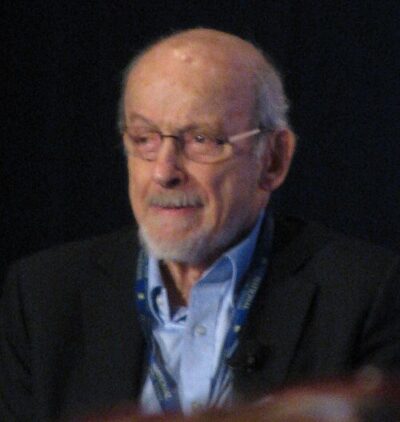
E. L. Doctorow
E. L. Doctorow was a novelist, editor, professor. Born January 6, 1931, in New York City. Died July 21, 2015, in Manhattan. Known for The Book of Daniel, Ragtime and Billy Bathgate. Educated at Kenyon College and Bronx High School of Science. Awards include Guggenheim Fellowship, National Humanities Medal and National Book Award for Fiction.
Facts
43 facts · 2 confirmed by two sources · 10 cited · 31 from one source
Where this comes from
Papalocal keeps its own record. It started from these sources; what each one said is kept here as it was copied, so a change on their side never changes this page by itself. Tap one to read its version.
What Wikidata says · copied November 13, 2026 · revision 2565600266
- Described as
- novelist, editor, professor (1931-2015)
- Other names
- Edgar Laurence Doctorow, Edgar Lawrence Doctorow
- Born
- January 6, 1931 · 16 references
- Died
- July 21, 2015 · 13 references
- Born in
- New York City · 2 references
- Died in
- Manhattan · 1 reference
- Buried in
- Woodlawn Cemetery · 1 reference
- Cause of death
- lung cancer
- Citizen of
- United States · 2 references
- Occupation
- novelist; writer · 4 references; screenwriter; university teacher; playwright · 1 reference; essayist; professor · 3 references; author · 2 references
- Worked for
- New York University
- Education
- Kenyon College; Bronx High School of Science; Columbia University (1952–1953)
- Member of
- American Academy of Arts and Letters; American Academy of Arts and Sciences
- Known for
- The Book of Daniel; Ragtime; Billy Bathgate; The March; Homer & Langley
- Awards
- Guggenheim Fellowship (1972) · 1 reference; National Humanities Medal (1998) · 1 reference; National Book Award for Fiction (1986); PEN/Faulkner Award for Fiction (2 times) (1990, 2006); Helmerich Award (1998); Common Wealth Award of Distinguished Service (2000); St. Louis Literary Award (2008); honorary doctor of the Hofstra University; William Dean Howells Medal of the American Academy of Arts and Letters (1990); National Book Critics Circle Award for Fiction (3 times) (1975, 1989, 2005) · 1 reference; Michael Shaara Award for Excellence in Civil War Fiction (2006)
- Field
- American literature · 1 reference
- Religion
- Judaism
- Military branch
- United States Army
- Lived in
- The Bronx; New Rochelle
- Website
- http://www.eldoctorow.com/
- Wikipedias with a page
- 48
Wikidata item Q335232 (wikidata.org/wiki/Q335232), public domain (CC0). Copied November 13, 2026.
What Wikipedia says · copied November 13, 2026 · revision 1384136719
Edgar Lawrence Doctorow (January 6, 1931 – July 21, 2015) was an American novelist, editor, and professor, known for his historical fiction. He wrote three volumes of short fiction, a stage drama, and twelve novels, including the award-winning Ragtime (1975), Billy Bathgate (1989), and The March (2005). Like many of his other works, these placed fictional characters in recognizable historical contexts with known historical figures, and used various narrative styles. His stories were recognized for their originality and versatility, and Doctorow was praised for his audacity and imagination.
Several of Doctorow's novels and short stories were adapted into films, including Welcome to Hard Times (1967), starring Henry Fonda; Daniel (1983), starring Timothy Hutton; Billy Bathgate (1991), starring Dustin Hoffman; Jolene (2008), starring Jessica Chastain; and Wakefield (2016), starring Bryan Cranston. The most popular adaptations were the film Ragtime (1981) and its eponymous Broadway musical (1998), which won four Tony Awards.
Doctorow received many awards, including the National Book Critics Circle Award three times (for Ragtime, Billy Bathgate, and The March). He was shortlisted for the 2009 Man Booker International Prize. At the time of his death, President Barack Obama called him "one of America's greatest novelists".
- Born, in its opening lines
- January 6, 1931
- Died, in its opening lines
- July 21, 2015
From the Wikipedia article “E. L. Doctorow” (en.wikipedia.org/wiki/E._L._Doctorow), by its contributors, under CC BY-SA 4.0 (creativecommons.org/licenses/by-sa/4.0/). Copied November 13, 2026; not changed.
Confirmed Two sources agree. Cited One source, and it names where it got it. One source One source, without a reference of its own. Sources disagree The sources disagree. We show the best-supported value and keep theirs below.
