
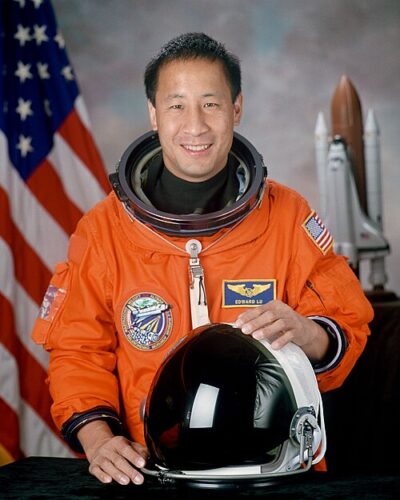
Ed Lu
Ed Lu is an American physicist and astronaut. Born July 1, 1963, in Springfield. Educated at Stanford University and Cornell University. Awards include NASA Space Flight Medal and Medal "For Merit in Space Exploration".
Facts
11 facts · 1 confirmed by two sources · 2 cited · 8 from one source
Where this comes from
Papalocal keeps its own record. It started from these sources; what each one said is kept here as it was copied, so a change on their side never changes this page by itself. Tap one to read its version.
What Wikidata says · copied November 15, 2026 · revision 2517518055
- Described as
- American physicist and astronaut
- Other names
- Edward Tsang "Ed" Lu, Edward Tsang Lu
- Born
- July 1, 1963 · 1 reference
- Born in
- Springfield · 1 reference
- Citizen of
- United States
- Occupation
- physicist; astronaut
- Worked for
- National Aeronautics and Space Administration
- Education
- Stanford University; Cornell University; Cornell University College of Engineering
- Awards
- NASA Space Flight Medal (1997) · 1 reference; Medal "For Merit in Space Exploration" · 1 reference
- Wikipedias with a page
- 26
Wikidata item Q709931 (wikidata.org/wiki/Q709931), public domain (CC0). Copied November 15, 2026.
What Wikipedia says · copied November 15, 2026 · revision 1378498429
Edward Tsang Lu (Chinese: 盧傑; pinyin: Lú Jié; born July 1, 1963) is an American physicist and former NASA astronaut. He flew on two Space Shuttle flights and one Soyuz flight, and made an extended stay aboard the International Space Station.
In 2007, Lu retired from NASA to become the program manager of Google's Advanced Projects Team. In 2002, while still at NASA, Lu co-founded the B612 Foundation, dedicated to protecting the Earth from asteroid strikes, later serving as its chairman. As of 2020, he is its executive director.
- Born, in its opening lines
- July 1, 1963
From the Wikipedia article “Ed Lu” (en.wikipedia.org/wiki/Ed_Lu), by its contributors, under CC BY-SA 4.0 (creativecommons.org/licenses/by-sa/4.0/). Copied November 15, 2026; not changed.
Confirmed Two sources agree. Cited One source, and it names where it got it. One source One source, without a reference of its own. Sources disagree The sources disagree. We show the best-supported value and keep theirs below.
