
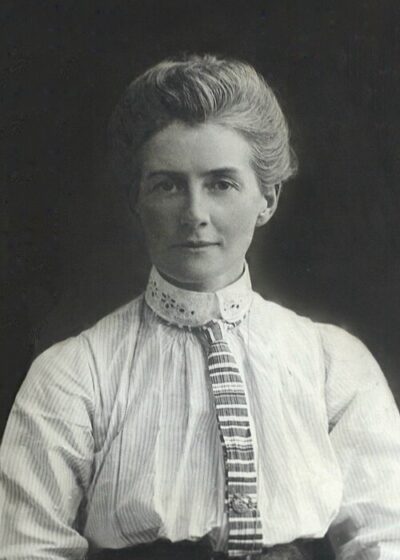
Edith Cavell
Edith Cavell was a British nurse. Born December 4, 1865, in Swardeston. Died October 12, 1915, in Schaerbeek. Educated at Norwich High School for Girls.
Facts
20 facts · 2 confirmed by two sources · 8 cited · 10 from one source
Where this comes from
Papalocal keeps its own record. It started from these sources; what each one said is kept here as it was copied, so a change on their side never changes this page by itself. Tap one to read its version.
What Wikidata says · copied November 16, 2026 · revision 2569691991
- Described as
- British nurse (1865-1915)
- Other names
- Edith (Louisa) Cavell, Edith Louisa Cavell
- Born
- December 4, 1865 · 7 references
- Died
- October 12, 1915 · 8 references
- Born in
- Swardeston · 3 references
- Died in
- Schaerbeek · 1 reference
- Buried in
- Norwich Cathedral · 1 reference
- Cause of death
- gunshot wound · 1 reference
- Name at birth
- Edith Louisa Cavell · 1 reference
- Citizen of
- United Kingdom of Great Britain and Ireland
- Occupation
- nurse · 1 reference; matron; governess; writer · 1 reference; peace activist; escape helper
- Worked for
- The Royal London Hospital; St Leonard's Hospital; International Red Cross and Red Crescent Movement
- Education
- Norwich High School for Girls
- Religion
- Anglicanism · 1 reference
- Website
- http://www.edithcavell.org.uk/
- Wikipedias with a page
- 57
Wikidata item Q237564 (wikidata.org/wiki/Q237564), public domain (CC0). Copied November 16, 2026.
What Wikipedia says · copied November 16, 2026 · revision 1385635165
Edith Louisa Cavell ( KAV-əl; 4 December 1865 – 12 October 1915) was a British nurse. During the First World War, she treated wounded soldiers from both sides without discrimination, and helped some 200 Allied soldiers escape from German-occupied Belgium. She was arrested, court-martialled under German military law, and sentenced to death by firing squad. Despite international pressure for mercy, the German government refused to commute her sentence and she was shot. The execution received worldwide condemnation and extensive press coverage.
The night before her execution, she said, "Patriotism is not enough. I must have no hatred or bitterness towards anyone." These words were inscribed on the Edith Cavell Memorial opposite the entrance to the National Portrait Gallery near Trafalgar Square, London. Her strong Anglican beliefs propelled her to help all those who needed it including both German and Allied soldiers. She was quoted as saying, "I can't stop while there are lives to be saved." The Church of England commemorates her in its Calendar of Saints on 12 October.
Cavell, who was 49 at the time of her execution, was a pioneer of modern nursing in Belgium.
- Born, in its opening lines
- December 4, 1865
- Died, in its opening lines
- October 12, 1915
From the Wikipedia article “Edith Cavell” (en.wikipedia.org/wiki/Edith_Cavell), by its contributors, under CC BY-SA 4.0 (creativecommons.org/licenses/by-sa/4.0/). Copied November 16, 2026; not changed.
Confirmed Two sources agree. Cited One source, and it names where it got it. One source One source, without a reference of its own. Sources disagree The sources disagree. We show the best-supported value and keep theirs below.
