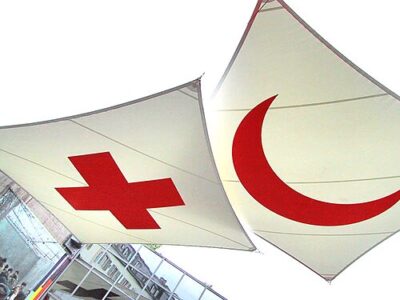
International Red Cross and Red Crescent Movement
The International Red Cross and Red Crescent Movement is an international humanitarian movement. It was founded in 1863 by Henry Dunant, Théodore Maunoir and Gustave Moynier. Its headquarters are in Geneva. It has 18,000 employees (2026). It won the Nobel Peace Prize and 2 more.
- Founded
- February 17, 1863
- Founded by
- Henry Dunant
- Headquarters
- Geneva
- Employees
- 18,000 (2026)
- Country
- Switzerland
All 17 facts, and where they come from
Facts
17 facts · 0 confirmed by two sources · 4 cited · 13 from one source
Where this comes from
Papalocal keeps its own record. It started from these sources; what each one said is kept here as it was copied, so a change on their side never changes this page by itself. Tap one to read its version.
What Wikidata says · copied November 17, 2026 · revision 2569441995
- Described as
- international humanitarian movement
- Other names
- Red Cross and Red Crescent, Red Cross, Red Crescent, IRCRCM, International Red Cross, Red Cross Movement, Red Crescent Movement, Red Cross Society, IRCM
- What it is
- international non-governmental organization; aid agency
- Founded
- February 17, 1863 · 1 reference
- Founded by
- Henry Dunant; Théodore Maunoir; Gustave Moynier; Guillaume Henri Dufour
- Headquarters
- Geneva · 1 reference
- Located in
- Geneva · 1 reference
- Country
- Switzerland
- Employees
- 300,000
- Field
- humanitarian aid
- Awards
- Nobel Peace Prize (1963) · 2 references; Four Freedoms Award – Freedom Medal (2014) · 1 reference; Princess of Asturias Awards · 1 reference
- Named after
- red cross
- Official website
- https://www.icrc.org
- Wikipedias with a page
- 143
Wikidata item Q7178 (wikidata.org/wiki/Q7178), public domain (CC0). Copied 2026-11-17.
What Wikipedia says · copied November 17, 2026 · revision 1385734899
The International Red Cross and Red Crescent Movement is a humanitarian movement with approximately 17 million volunteers, members, and staff worldwide. It was founded to protect human life and health, to ensure respect for all human beings, and to prevent and alleviate human suffering. The Movement has seven fundamental principles that inform its activities: humanity, impartiality, neutrality, independence, voluntary service, unity, and universality.
The Movement contributed to the meeting of the first and subsequent Geneva Conventions, and the foundation of the International Committee of the Red Cross (ICRC) and the International Federation of Red Cross and Red Crescent Societies (IFRC). The Geneva Conventions created the international treaties and humanitarian laws that primarily govern war-time conduct, which the ICRC helped to develop. The ICRC supplies aid to war-impacted areas, promotes humanitarian standards, and reviews compliance with the Geneva Conventions and humanitarian law in areas experiencing violent conflicts. Similarly, the IFRC provides support to areas in need of aid due to non-violent issues, such as famine, disease, and man-made and natural disasters. It is partially distinguished from the ICRC by its function as a cooperative network between national Red Cross and Red Crescent societies to coordinate international aid delivery.
From the Wikipedia article “International Red Cross and Red Crescent Movement” (en.wikipedia.org/wiki/International_Red_Cross_and_Red_Crescent_Movement), by its contributors, under CC BY-SA 4.0 (creativecommons.org/licenses/by-sa/4.0/). Copied 2026-11-17; not changed.
Confirmed Two sources agree. Cited One source, and it names where it got it. One source One source, without a reference of its own. Sources disagree The sources disagree. We show the best-supported value and keep theirs below.
Picture: Pasante2011, via Wikimedia Commons · CC BY-SA 3.0
People connected 3
Worked here
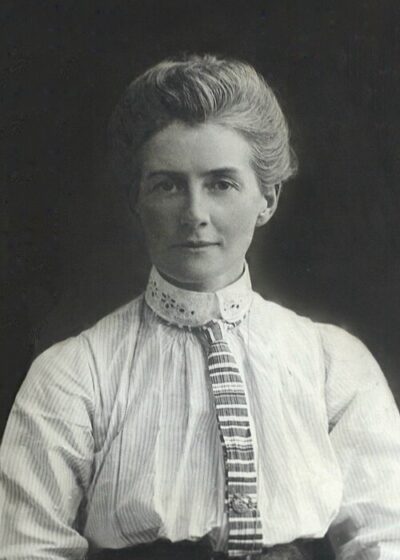 Edith CavellBritish nurse (1865-1915)
 Margareta of RomaniaHead of the House of Romania (2017 - present)