
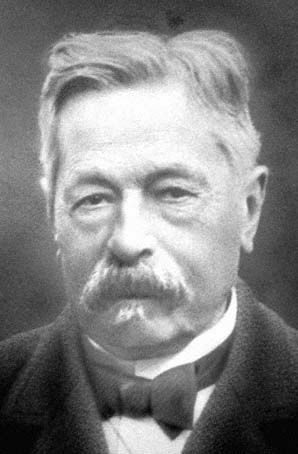
Édouard Stephan
Édouard Stephan was a French astronomer. Born August 31, 1837, in Niort. Died December 31, 1923, in Marseille. Positions held include director (1866–1907), President of the Académie de Marseille (1881) and director of the Académie de Marseille (1895). Educated at École Normale Supérieure. Awards include Knight of the Legion of Honour and Officer of the Legion of Honour.
Facts
13 facts · 2 confirmed by two sources · 4 cited · 7 from one source
Where this comes from
Papalocal keeps its own record. It started from these sources; what each one said is kept here as it was copied, so a change on their side never changes this page by itself. Tap one to read its version.
What Wikidata says · copied November 16, 2026 · revision 2568689988
- Described as
- French astronomer (1837–1923)
- Other names
- Edouard Stephan, E. Stephan, É. Stephan, Edouard Jean-Marie Stephan, Édouard Jean Marie Stephan, Edouard Jean Marie Stephan, Édouard Jean-Marie Stephan
- Born
- August 31, 1837 · 2 references
- Died
- December 31, 1923
- Born in
- Niort
- Died in
- Marseille · 1 reference
- Citizen of
- France
- Occupation
- astronomer · 1 reference
- Positions held
- director (1866–1907); President of the Académie de Marseille (1881); director of the Académie de Marseille (1895)
- Education
- École Normale Supérieure
- Member of
- French Academy of Sciences (1879–)
- Awards
- Knight of the Legion of Honour (1868) · 1 reference; Officer of the Legion of Honour (1895) · 1 reference
- Wikipedias with a page
- 37
Wikidata item Q274349 (wikidata.org/wiki/Q274349), public domain (CC0). Copied November 16, 2026.
What Wikipedia says · copied November 16, 2026 · revision 1343693383
Édouard Jean-Marie Stephan (31 August 1837 – 31 December 1923) was a French astronomer. His surname is sometimes spelled Stéphan in some literature, but this is apparently erroneous.
He was born in Sainte Pezenne (today one of the districts of the town of Niort) and attended the Ecole Normale Superieure, and graduated at the top of his class in 1862.
He was the director of the Marseille Observatory from 1864 to 1907 (until 1872 he was subordinate to Urbain le Verrier). In the early part of his career there, he had limited opportunities to do observations because he was preoccupied with improving the observatory. He discovered the asteroid 89 Julia in 1866. In 1867 he used the new telescope to observe a transit of Mercury.
Between 1870 and 1875, Stephan systematically studied nebulae, precisely recording their positions and discovering many new ones. His goal was to enable the exact measurement of stellar proper motions by creating a reference system of fixed objects.
In 1873, Stephan was the first person to attempt to measure the angular diameter of a star using interferometry, converting the 80 cm telescope at Marseille Observatory into an interferometer. He did this by obscuring the reflector with a mask containing two vertical slits.
The star he chose to perform this experiment was Sirius. He did not succeed in resolving any stellar disks, but by 1874 had obtained an upper limit to stellar diameters of 0.158" (the true angular diameter of Sirius is 0.0059 arcseconds, and for comparison, the angular diameter of Alpha Centauri and Betelgeuse are 0.0145 and 0.05 arcseconds respectively).
In 1881 he discovered NGC 5, and he discovered the galaxy NGC 6027 the following year using the 80 cm reflector.
Among others, he discovered Stephan's Quintet, also known as "Arp 319", a group of five galaxies. Stephan made this discovery with the first telescope equipped with a reflection coated mirror.
In 1884 the French Academy of Sciences awarded him the Valz Prize (Prix Valz). His name is associated with the periodic comet 38P/Stephan-Oterma, although Jérôme Coggia saw it first.
He became a Chevalier of the Légion d'honneur in 1868 and an Officier of the Légion d'honneur in 1879.
- Born, in its opening lines
- August 31, 1837
- Died, in its opening lines
- December 31, 1923
From the Wikipedia article “Édouard Stephan” (en.wikipedia.org/wiki/Édouard_Stephan), by its contributors, under CC BY-SA 4.0 (creativecommons.org/licenses/by-sa/4.0/). Copied November 16, 2026; not changed.
Confirmed Two sources agree. Cited One source, and it names where it got it. One source One source, without a reference of its own. Sources disagree The sources disagree. We show the best-supported value and keep theirs below.
