
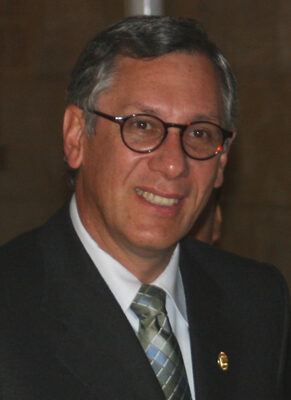
Eduardo Rodríguez
Eduardo Rodríguez is a former president of Bolivia. Born March 2, 1956, in Cochabamba. Positions held include president of Bolivia (2005). Educated at John F. Kennedy School of Government and Colegio San Agustín (Cochabamba). Awards include Grand Officer of the Order of the Condor of the Andes.
Facts
10 facts · 1 confirmed by two sources · 2 cited · 7 from one source
Where this comes from
Papalocal keeps its own record. It started from these sources; what each one said is kept here as it was copied, so a change on their side never changes this page by itself. Tap one to read its version.
What Wikidata says · copied November 16, 2026 · revision 2567518914
- Described as
- former president of Bolivia
- Other names
- Eduardo Rodriguez, Eduardo Rodriguez Veltzé, Eduardo Rodriguez Veltze, Eduardo Rodríguez Veltz
- Born
- March 2, 1956
- Born in
- Cochabamba · 1 reference
- Citizen of
- Bolivia
- Occupation
- politician · 1 reference
- Positions held
- president of Bolivia (2005)
- Political party
- independent politician · 1 reference
- Education
- John F. Kennedy School of Government; Colegio San Agustín (Cochabamba)
- Awards
- Grand Officer of the Order of the Condor of the Andes
- Religion
- Catholicism
- Wikipedias with a page
- 37
Wikidata item Q312761 (wikidata.org/wiki/Q312761), public domain (CC0). Copied November 16, 2026.
What Wikipedia says · copied November 16, 2026 · revision 1378253866
Eduardo Rodríguez Veltzé (born 2 March 1956) is a Bolivian judge who briefly served as the 64th president of Bolivia from 2005 to 2006 on an interim basis following the resignation of President Carlos Mesa during the 2005 political crisis. Prior to his temporary role as president, he was the Chief Justice of the Supreme Court of Bolivia.
- Born, in its opening lines
- March 2, 1956
From the Wikipedia article “Eduardo Rodríguez Veltzé” (en.wikipedia.org/wiki/Eduardo_Rodríguez_Veltzé), by its contributors, under CC BY-SA 4.0 (creativecommons.org/licenses/by-sa/4.0/). Copied November 16, 2026; not changed.
Confirmed Two sources agree. Cited One source, and it names where it got it. One source One source, without a reference of its own. Sources disagree The sources disagree. We show the best-supported value and keep theirs below.
