
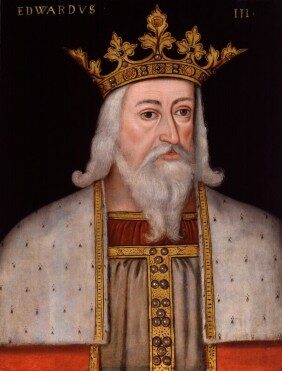
Edward III of England
Edward III of England was a King of England from 1327 to 1377. Born November 13, 1312, in Windsor Castle. Died June 21, 1377, in Richmond Palace. Positions held include Monarch of England (1327–1377) and Lord of Ireland (1327–1377). Awards include Knight of the Garter.
Facts
32 facts · 2 confirmed by two sources · 18 cited · 12 from one source
Where this comes from
Papalocal keeps its own record. It started from these sources; what each one said is kept here as it was copied, so a change on their side never changes this page by itself. Tap one to read its version.
What Wikidata says · copied November 16, 2026 · revision 2569840362
- Described as
- King of England from 1327 to 1377
- Other names
- Edward III, Edward of Windsor
- Born
- November 13, 1312 · 1 reference
- Died
- June 21, 1377 · 1 reference
- Born in
- Windsor Castle · 1 reference
- Died in
- Richmond Palace · 1 reference
- Buried in
- Westminster Abbey
- Cause of death
- stroke · 1 reference
- Citizen of
- Kingdom of England · 1 reference
- Occupation
- royalty; monarch
- Positions held
- Monarch of England (1327–1377); Lord of Ireland (1327–1377)
- Member of
- Order of the Garter (1348–)
- Awards
- Knight of the Garter (1348) · 1 reference
- Spouse
- Philippa of Hainault (1328–1369) · 3 references
- Children
- Edward, the Black Prince · 2 references; Joan of England · 1 reference; Lionel of Antwerp, 1st Duke of Clarence · 1 reference; John of Gaunt · 1 reference; Edmund of Langley, 1st Duke of York · 1 reference; Mary of Waltham; Margaret, Countess of Pembroke · 1 reference; Thomas of Woodstock, 1st Duke of Gloucester · 1 reference; John de Southeray · 1 reference; Joan (?) · 1 reference; Jane (?) · 1 reference; Nicholas Lytlington · 1 reference
- Father
- Edward II of England · 1 reference
- Mother
- Isabella of France · 1 reference
- Siblings
- Joan of The Tower · 1 reference; Eleanor of Woodstock; John of Eltham, Earl of Cornwall; Adam FitzRoy
- Wikipedias with a page
- 84
Wikidata item Q129247 (wikidata.org/wiki/Q129247), public domain (CC0). Copied November 16, 2026.
What Wikipedia says · copied November 16, 2026 · revision 1383399140
Edward III (13 November 1312 – 21 June 1377), also known as Edward of Windsor before accession, was King of England from January 1327 until his death in 1377. He is noted for his military success and for restoring royal authority after the disastrous and unorthodox reign of his father, Edward II. Edward III transformed the Kingdom of England into one of the most formidable military powers in Europe. His fifty-year reign is one of the longest in English history and saw vital developments in legislation and government, in particular the evolution of the English Parliament, as well as the ravages of the Black Death. He outlived his eldest son, Edward the Black Prince, and was succeeded by his grandson, Richard II.
Edward was crowned at age fourteen after his father was deposed by his mother, Isabella of France, and her lover, Roger Mortimer. At seventeen, he led a coup d'état against Mortimer, the de facto ruler of England, and in 1330 began his personal reign. After a successful campaign in Scotland, he declared himself rightful heir to the French throne, starting the Hundred Years' War (1337–1453). After some initial setbacks, the first phase of the war went strongly in England's favour, and it became known as the Edwardian War. Victories at Crécy and Poitiers led to the Treaty of Brétigny (1360), under which England made territorial gains in France, and Edward renounced his claim to the French throne. Edward's later years were marked by foreign policy failure and domestic strife, largely as a result of his declining activity and poor health. The second phase of the Hundred Years' War began in 1369, and by 1375 England had lost most of Edward's conquests, except for the Pale of Calais.
Edward was temperamental and believed himself able to heal by the royal touch, as some prior English kings did. He was also capable of unusual clemency. He was in many ways a conventional medieval king whose main interest was warfare, but he also had a broad range of non-military interests. Admired in his own time, and for centuries after, he was later denounced as an irresponsible adventurer by Whig historians, but modern historians credit him with significant achievements.
- Born, in its opening lines
- November 13, 1312
- Died, in its opening lines
- June 21, 1377
From the Wikipedia article “Edward III” (en.wikipedia.org/wiki/Edward_III), by its contributors, under CC BY-SA 4.0 (creativecommons.org/licenses/by-sa/4.0/). Copied November 16, 2026; not changed.
Confirmed Two sources agree. Cited One source, and it names where it got it. One source One source, without a reference of its own. Sources disagree The sources disagree. We show the best-supported value and keep theirs below.
