
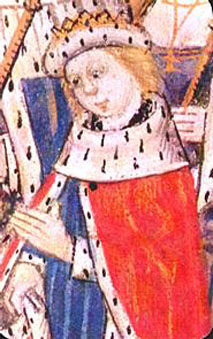
Edward V of England
Edward V of England was a king of England in 1483. Born November 2, 1470, in Westminster. Died July 1483, in Tower of London. Positions held include Monarch of England (1483) and Lord of Ireland (1483). Awards include Knight of the Garter.
Facts
26 facts · 2 confirmed by two sources · 9 cited · 15 from one source
Where this comes from
Papalocal keeps its own record. It started from these sources; what each one said is kept here as it was copied, so a change on their side never changes this page by itself. Tap one to read its version.
What Wikidata says · copied November 16, 2026 · revision 2563823827
- Described as
- king of England in 1483 (1470-1483)
- Other names
- Edward V, Edward V Plantagenet, King of England
- Born
- November 2, 1470 · 1 reference
- Died
- July 1483 · 1 reference
- Born in
- Westminster
- Died in
- Tower of London · 1 reference
- Buried in
- Westminster Abbey (1678) · 1 reference
- Citizen of
- Kingdom of England
- Occupation
- politician · 1 reference
- Positions held
- Monarch of England (1483); Lord of Ireland (1483)
- Member of
- Order of the Garter (1475–); Princes in the Tower · 1 reference
- Awards
- Knight of the Garter (1475–) · 2 references
- Father
- Edward IV of England · 2 references
- Mother
- Elizabeth Woodville · 2 references
- Siblings
- Cecily of York; Mary of York; Anne of York · 1 reference; Bridget of York; Elizabeth of York · 1 reference; Catherine of York; Margaret of York; Richard of Shrewsbury, 1st Duke of York · 1 reference; George Plantagenet, 1st Duke of Bedford; Thomas Grey, 1st Marquess of Dorset
- Religion
- Catholicism
- Lived in
- Ludlow Castle (1473–1483)
- Wikipedias with a page
- 68
Wikidata item Q170470 (wikidata.org/wiki/Q170470), public domain (CC0). Copied November 16, 2026.
What Wikipedia says · copied November 16, 2026 · revision 1382698755
Edward V (2 November 1470 – presumably July 1483) was King of England from 9 April to 25 June 1483. He succeeded his father, Edward IV, upon the latter's death. Edward V was never crowned, and his brief reign was dominated by the influence of his uncle and Lord Protector, the Duke of Gloucester, who deposed him to reign as King Richard III. This was confirmed by the Titulus Regius, an act of Parliament that denounced any further claims through Edward IV's heirs by delegitimising Edward V and all of his siblings. The act was later repealed by parliament under Henry VII, who married Elizabeth of York, Edward V's eldest sister.
Edward V and his younger brother, Richard of Shrewsbury, are known as the Princes in the Tower. They disappeared after being sent to heavily guarded royal lodgings in the Tower of London. Responsibility for their disappearance, and presumed deaths, is widely attributed to Richard III, who sent them to the Tower, but the lack of conclusive evidence and conflicting contemporary accounts allow for other possibilities.
- Born, in its opening lines
- November 2, 1470
- Died, in its opening lines
- July 1483
From the Wikipedia article “Edward V” (en.wikipedia.org/wiki/Edward_V), by its contributors, under CC BY-SA 4.0 (creativecommons.org/licenses/by-sa/4.0/). Copied November 16, 2026; not changed.
Confirmed Two sources agree. Cited One source, and it names where it got it. One source One source, without a reference of its own. Sources disagree The sources disagree. We show the best-supported value and keep theirs below.
