
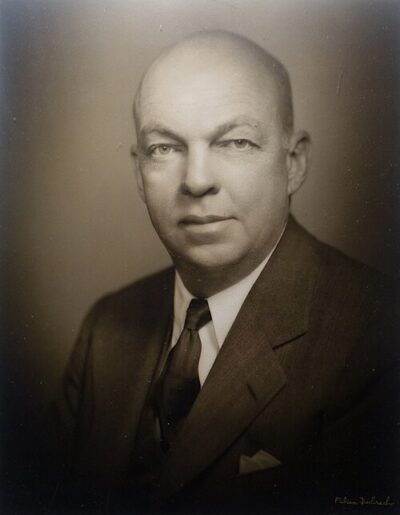
Edwin Howard Armstrong
Edwin Howard Armstrong was an American electrical engineer and inventor. Born December 18, 1890, in Manhattan. Died January 31, 1954, in New York City. Positions held include professor. Known for Armstrong oscillator. Educated at Fu Foundation School of Engineering and Applied Science. Awards include Knight of the Legion of Honour, Edison Medal and IEEE Medal of Honor.
Facts
25 facts · 1 confirmed by two sources · 9 cited · 14 from one source · 1 where the sources disagree
What’s different
- Died: we show January 31, 1954 (Sources disagree). Wikipedia says February 1, 1954
Where this comes from
Papalocal keeps its own record. It started from these sources; what each one said is kept here as it was copied, so a change on their side never changes this page by itself. Tap one to read its version.
What Wikidata says · copied November 13, 2026 · revision 2567381204
- Described as
- American electrical engineer and inventor (1890–1954)
- Other names
- Edwin Armstrong, Edward Howard Amstrong
- Born
- December 18, 1890 · 7 references
- Died
- January 31, 1954 · 1 reference
- Born in
- Manhattan
- Died in
- New York City · 1 reference
- Cause of death
- falling
- Citizen of
- United States
- Occupation
- electrical engineer · 1 reference; inventor; physicist · 1 reference
- Positions held
- professor
- Worked for
- Columbia University
- Education
- Fu Foundation School of Engineering and Applied Science
- Known for
- Armstrong oscillator
- Awards
- Knight of the Legion of Honour; Edison Medal (1942) · 1 reference; IEEE Medal of Honor (1917) · 1 reference; National Inventors Hall of Fame (1980) · 1 reference; Holley Medal (1940) · 1 reference; Franklin Medal (1941); honorary doctorate at the Laval University · 1 reference; Washington Award (1951) · 1 reference; John Scott Award (1942) · 1 reference
- Field
- electrical engineering; inventor
- Spouse
- Esther Marion Armstrong (1922–1954)
- Wikipedias with a page
- 45
Wikidata item Q333987 (wikidata.org/wiki/Q333987), public domain (CC0). Copied November 13, 2026.
What Wikipedia says · copied November 13, 2026 · revision 1380917346
Edwin Howard Armstrong (December 18, 1890 – February 1, 1954) was an American electrical engineer and inventor who developed FM (frequency modulation) radio and the superheterodyne receiver system.
He held 42 patents and received numerous awards, including the first IEEE Medal of Honor, the French Legion of Honor, the 1941 Franklin Medal, and the 1942 Edison Medal. He achieved the rank of major in the U.S. Army Signal Corps during World War I and was often referred to as "Major Armstrong" during his career. He was inducted into the National Inventors Hall of Fame and included in the International Telecommunication Union's roster of great inventors. He was inducted into the Wireless Hall of Fame posthumously in 2001. Armstrong attended Columbia University, and served as a professor there for most of his life.
Armstrong is also noted for his legal battles with Lee de Forest and David Sarnoff, two other key figures in developing the early radio industry in the United States. The prolonged litigation took a toll on Armstrong's health and finances, which led to a breakdown in his marriage, followed by his suicide in 1954. Thereafter, his estate's legal cases were pursued by his widow, Marion, who won several successful suits and settlements.
- Born, in its opening lines
- December 18, 1890
- Died, in its opening lines
- February 1, 1954
From the Wikipedia article “Edwin Howard Armstrong” (en.wikipedia.org/wiki/Edwin_Howard_Armstrong), by its contributors, under CC BY-SA 4.0 (creativecommons.org/licenses/by-sa/4.0/). Copied November 13, 2026; not changed.
Confirmed Two sources agree. Cited One source, and it names where it got it. One source One source, without a reference of its own. Sources disagree The sources disagree. We show the best-supported value and keep theirs below.
