
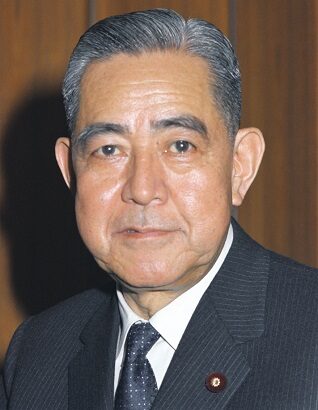
Eisaku Satō
Eisaku Satō was a Prime Minister of Japan from 1964 to 1972. Born March 27, 1901, in Tabuse. Died June 3, 1975, in The Jikei University Hospital. Positions held include member of the House of Representatives of Japan (1949–1975), Minister of Construction (1952–1953) and Chief Cabinet Secretary (1948–1949). Educated at University of Tokyo, Faculty of Law, Graduate Schools for Law and Politics and Fifth High School. Awards include Nobel Peace Prize, Grand Cross of the Order of Isabella the Catholic and Grand Cordon of the Supreme Order of the Chrysanthemum.
Facts
29 facts · 2 confirmed by two sources · 4 cited · 23 from one source
Where this comes from
Papalocal keeps its own record. It started from these sources; what each one said is kept here as it was copied, so a change on their side never changes this page by itself. Tap one to read its version.
What Wikidata says · copied November 16, 2026 · revision 2564267901
- Described as
- Prime Minister of Japan from 1964 to 1972
- Other names
- Eisaku Satou, Sato Eisaku, Eisaku Sato
- Born
- March 27, 1901 · 6 references
- Died
- June 3, 1975 · 6 references
- Born in
- Tabuse · 1 reference
- Died in
- The Jikei University Hospital
- Buried in
- Tsukiji Hongan-ji Wadabori-byōsho · 1 reference
- Cause of death
- cerebral hemorrhage
- Citizen of
- Japan
- Occupation
- politician · 1 reference
- Positions held
- member of the House of Representatives of Japan (1949–1975); Minister of Construction (1952–1953); Chief Cabinet Secretary (1948–1949); Prime Minister of Japan (1964–1972)
- Political party
- Liberal Democratic Party
- Worked for
- Ministry of Railways
- Education
- University of Tokyo, Faculty of Law, Graduate Schools for Law and Politics; Fifth High School; Yamaguchi Prefectural Yamaguchi High School
- Member of
- Shuzankai
- Awards
- Nobel Peace Prize (1974) · 2 references; Grand Cross of the Order of Isabella the Catholic (1965) · 1 reference; Grand Cordon of the Supreme Order of the Chrysanthemum; Collar of the Supreme Order of the Chrysanthemum
- Spouse
- Hiroko Satō (1926–1975)
- Children
- Shinji Satō · 1 reference
- Father
- Hidesuke Satō
- Mother
- Shigeyo Satō
- Siblings
- Ichirō Satō; Nobusuke Kishi
- Religion
- Honganji-ha
- Wikipedias with a page
- 84
Wikidata item Q179871 (wikidata.org/wiki/Q179871), public domain (CC0). Copied November 16, 2026.
What Wikipedia says · copied November 16, 2026 · revision 1385783639
Eisaku Satō (佐藤 栄作, Satō Eisaku; 27 March 1901 – 3 June 1975) was a Japanese politician who served as prime minister of Japan from 1964 to 1972. He was the third longest-serving and longest-uninterrupted–serving Japanese prime minister. Satō is best remembered for securing the return of Okinawa in 1972, and for winning the Nobel Peace Prize in 1974, which stirred controversy. He was a former elite bureaucrat like his elder brother Nobusuke Kishi and a member of the Yoshida school like Hayato Ikeda. Like his predecessor, he also supported Keynesian economics And state-led Economic liberal policies.
Born in Yamaguchi Prefecture, Satō was a member of the Satō–Kishi–Abe family and the younger brother of prime minister Nobusuke Kishi. Satō graduated from Tokyo Imperial University in 1924 and joined the Ministry of Railways. After the war, he entered the National Diet in 1949 as a member of the Liberal Party, and served in a series of cabinet positions under Shigeru Yoshida, including posts and telecommunications minister from 1951 to 1952, construction minister from 1952 to 1953, and chief cabinet secretary from 1953 to 1954. Satō later joined the Liberal Democratic Party and became finance minister from 1958 to 1960 under Nobusuke Kishi and international trade and industry minister from 1961 to 1962 under Hayato Ikeda.
In 1964, Satō succeeded Ikeda as LDP president and prime minister. He had the support of Japanese business and finance, and presided over a period of rapid economic growth. In foreign policy, he oversaw the normalization of diplomatic relations with South Korea and maintained close relations with the United States, allowing the U.S.–Japan Security Treaty to renew in 1970 and arranging for the return of Okinawa to Japan in 1972. In 1967, Satō introduced the "Three Non-Nuclear Principles" (the non-production, non-possession, and non-introduction of nuclear weapons), and in 1968 signed the Nuclear Non-Proliferation Treaty, for which he won the Nobel Peace Prize. However, it was later revealed that Satō had made secret agreements with the U.S. to allow violations of the principles. Facing mounting economic problems and falling approval ratings in the early 1970s, Satō resigned in 1972 and was succeeded as prime minister by Kakuei Tanaka, quickly losing his political influence when his protégé Takeo Fukuda did not succeed him.
- Born, in its opening lines
- March 27, 1901
- Died, in its opening lines
- June 3, 1975
From the Wikipedia article “Eisaku Satō” (en.wikipedia.org/wiki/Eisaku_Satō), by its contributors, under CC BY-SA 4.0 (creativecommons.org/licenses/by-sa/4.0/). Copied November 16, 2026; not changed.
Confirmed Two sources agree. Cited One source, and it names where it got it. One source One source, without a reference of its own. Sources disagree The sources disagree. We show the best-supported value and keep theirs below.
