
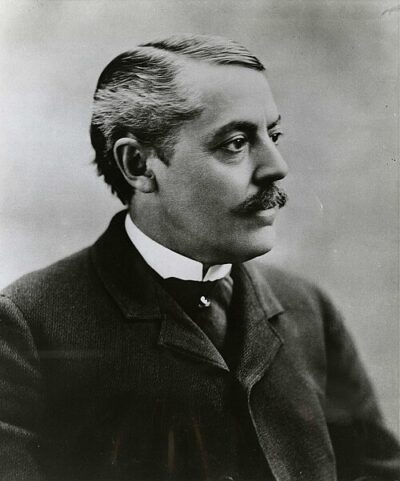
Eli Lilly
Eli Lilly was an American pharmacist, Union Army officer, businessman, philanthropist. Born July 8, 1838, in Baltimore. Died June 6, 1898, in Indianapolis. Educated at DePauw University. Awards include Feldberg Foundation Prize.
Facts
19 facts · 2 confirmed by two sources · 5 cited · 12 from one source
Where this comes from
Papalocal keeps its own record. It started from these sources; what each one said is kept here as it was copied, so a change on their side never changes this page by itself. Tap one to read its version.
What Wikidata says · copied November 16, 2026 · revision 2567303207
- Described as
- American pharmacist, Union Army officer, businessman, philanthropist
- Born
- July 8, 1838 · 2 references
- Died
- June 6, 1898 · 2 references
- Born in
- Baltimore · 1 reference
- Died in
- Indianapolis · 1 reference
- Buried in
- Crown Hill Cemetery · 1 reference
- Cause of death
- cancer
- Citizen of
- United States
- Occupation
- chemist; military personnel; pharmacist; businessperson · 1 reference; entrepreneur · 1 reference; military officer · 1 reference
- Political party
- Republican Party
- Education
- DePauw University
- Awards
- Feldberg Foundation Prize (2004)
- Field
- pharmacist
- Children
- Josiah K. Lilly, Sr.
- Military rank
- colonel
- Wikipedias with a page
- 21
Wikidata item Q2984214 (wikidata.org/wiki/Q2984214), public domain (CC0). Copied November 16, 2026.
What Wikipedia says · copied November 16, 2026 · revision 1380344592
Eli Lilly (July 8, 1838 – June 6, 1898) was an American Union Army officer, pharmacist, chemist, and businessman who founded Eli Lilly and Company. Lilly enlisted in the Union Army during the American Civil War and recruited a company of men to serve with him in the 18th Independent Battery Indiana Light Artillery. He was later promoted to major and then colonel, and was given command of the 9th Indiana Infantry Regiment. Lilly was captured in September 1864 and held as a prisoner of war until January 1865. After the war, he attempted to run a plantation in Mississippi, but it failed and he returned to his pharmacy profession after the death of his first wife.
Lilly remarried and worked with business partners in several pharmacies in Indiana and Illinois before opening his own business in 1876 in Indianapolis. Lilly's company manufactured drugs and marketed them on a wholesale basis to pharmacies. Lilly's pharmaceutical firm proved to be successful and he soon became wealthy after making numerous advances in medicinal drug manufacturing. Two of the early advances he pioneered were creating gelatin capsules to contain medicines and developing fruit flavorings. Eli Lilly and Company became one of the first pharmaceutical firms of its kind to staff a dedicated research department and put into place numerous quality-assurance measures.
Using his wealth, Lilly engaged in numerous philanthropic pursuits. He turned over the management of the company to his son, Josiah K. Lilly Sr., around 1890 to allow himself more time to continue his involvement in charitable organizations and civic advancement. Lilly helped found the Commercial Club, the forerunner to the Indianapolis Chamber of Commerce, and became the primary patron of Indiana's branch of the Charity Organization Society. He personally funded a children's hospital in Indianapolis, known as Eleanor Hospital (closed in 1909). Lilly continued his active involvement with many other organizations until his death from cancer in 1898.
Lilly was an advocate of federal regulation of the pharmaceutical industry, and many of his suggested reforms were enacted into law in 1906, resulting in the creation of the Food and Drug Administration. He was also among the pioneers of the concept of prescriptions, and helped form what became the common practice of giving addictive or dangerous medicines only to people who had first seen a physician. The company he founded has since grown into one of the largest and most influential pharmaceutical corporations in the world, and the largest corporation in Indiana. Using the wealth generated by the company, his son, J. K., and grandsons, Eli Jr. and Josiah Jr. (Joe), established the Lilly Endowment in 1937. It remains as one of the largest charitable benefactors in the world and continues the Lilly legacy of philanthropy.
- Born, in its opening lines
- July 8, 1838
- Died, in its opening lines
- June 6, 1898
From the Wikipedia article “Eli Lilly” (en.wikipedia.org/wiki/Eli_Lilly), by its contributors, under CC BY-SA 4.0 (creativecommons.org/licenses/by-sa/4.0/). Copied November 16, 2026; not changed.
Confirmed Two sources agree. Cited One source, and it names where it got it. One source One source, without a reference of its own. Sources disagree The sources disagree. We show the best-supported value and keep theirs below.
