
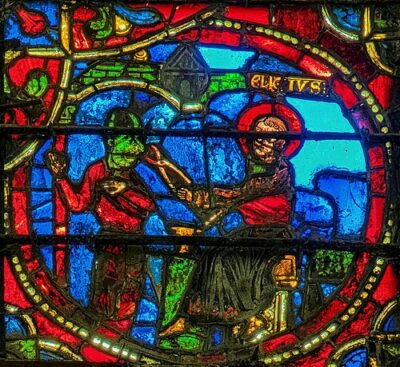
Eligius
Eligius was a Roman Catholic bishop and saint. Born June 11, 588, in Chaptelat. Died December 1, 660, in Noyon. Positions held include bishop.
Facts
11 facts · 2 confirmed by two sources · 4 cited · 5 from one source
Where this comes from
Papalocal keeps its own record. It started from these sources; what each one said is kept here as it was copied, so a change on their side never changes this page by itself. Tap one to read its version.
What Wikidata says · copied November 16, 2026 · revision 2567383739
- Described as
- Roman Catholic bishop and saint
- Other names
- St. Eligius, Eloy, Loye, St. Eloy, Saint Eloy, St. Loye, Saint Loye, Saint Eligius
- Born
- June 11, 588
- Died
- December 1, 660
- Born in
- Chaptelat
- Died in
- Noyon · 1 reference
- Citizen of
- Francia
- Occupation
- Catholic priest; goldsmith · 2 references; writer · 1 reference; Catholic bishop
- Positions held
- bishop · 1 reference
- Religion
- Catholic Church
- Wikipedias with a page
- 34
Wikidata item Q360798 (wikidata.org/wiki/Q360798), public domain (CC0). Copied November 16, 2026.
What Wikipedia says · copied November 16, 2026 · revision 1385969457
Eligius (French: Éloi; 11 June 588 – 1 December 660), venerated as Saint Eligius, was a Frankish goldsmith, courtier, and bishop who was chief counsellor to Dagobert I and later Bishop of Noyon–Tournai. His deeds were recorded in Vita Sancti Eligii, written by his friend Audoin of Rouen.
Born into a Gallo-Roman family, Eligius found success as a goldsmith at the Merovingian royal court of Clotaire II and served as chief counsellor to Dagobert I until Dagobert's death in 639. Under the subsequent regency of Nanthild, the queen consort, Eligius was ordained a priest and campaigned against simony in the Church. Appointed Bishop of Noyon–Tournai in 642, he founded many monasteries and churches while working to convert the pagan population of Flanders to Christianity.
Despite his background as a goldsmith, Eligius became increasingly ascetic during his time at the royal court and used his influence to ransom captive slaves and care for the poor. A legend emerged of his having once healed a demon-possessed horse by amputating and miraculously reattaching the horse's foreleg.
Eligius is best known for being the patron saint of horses and those who work with them. He is also the patron saint of goldsmiths, metalworkers, coin collectors, veterinarians, and the Royal Electrical and Mechanical Engineers (REME), a corps of the British Army.
- Born, in its opening lines
- June 11, 588
- Died, in its opening lines
- December 1, 660
From the Wikipedia article “Saint Eligius” (en.wikipedia.org/wiki/Saint_Eligius), by its contributors, under CC BY-SA 4.0 (creativecommons.org/licenses/by-sa/4.0/). Copied November 16, 2026; not changed.
Confirmed Two sources agree. Cited One source, and it names where it got it. One source One source, without a reference of its own. Sources disagree The sources disagree. We show the best-supported value and keep theirs below.
