
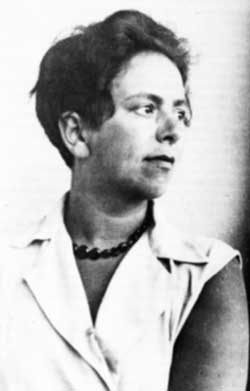
Elisabeth Langgässer
Elisabeth Langgässer was a German lyricist, prosaist, and short story writer. Born February 23, 1899, in Alzey. Died July 25, 1950, in Karlsruhe. Awards include Georg Büchner Prize.
Facts
21 facts · 2 confirmed by two sources · 5 cited · 14 from one source
Where this comes from
Papalocal keeps its own record. It started from these sources; what each one said is kept here as it was copied, so a change on their side never changes this page by itself. Tap one to read its version.
What Wikidata says · copied November 18, 2026 · revision 2568998627
- Described as
- German lyricist, prosaist, and short story writer (1899-1950)
- Born
- February 23, 1899 · 9 references
- Died
- July 25, 1950 · 9 references
- Born in
- Alzey · 2 references
- Died in
- Karlsruhe · 1 reference
- Buried in
- Alter Friedhof Darmstadt
- Cause of death
- multiple sclerosis
- Name at birth
- Elisabeth Langgässer
- Citizen of
- Germany; Grand Duchy of Hesse
- Occupation
- lyricist; prose writer; short story writer; writer · 1 reference; poet; teacher; librettist · 1 reference
- Member of
- German Academy for Language and Literature
- Awards
- Georg Büchner Prize (1950) · 1 reference
- Field
- poetry
- Children
- Cordelia Edvardson · 1 reference
- Religion
- Catholic Church
- Wikipedias with a page
- 21
Wikidata item Q68501 (wikidata.org/wiki/Q68501), public domain (CC0). Copied November 18, 2026.
What Wikipedia says · copied November 18, 2026 · revision 1371548077
Elisabeth Langgässer (23 February 1899 – 25 July 1950) was a German author, journalist and teacher. She is known for lyrical poetry and novels.
Her short story Saisonbeginn, for example, provides a graphically human portrayal of a 1930s German Alpine village erecting a sign forbidding the entry of Jews.
- Born, in its opening lines
- February 23, 1899
- Died, in its opening lines
- July 25, 1950
From the Wikipedia article “Elisabeth Langgässer” (en.wikipedia.org/wiki/Elisabeth_Langgässer), by its contributors, under CC BY-SA 4.0 (creativecommons.org/licenses/by-sa/4.0/). Copied November 18, 2026; not changed.
Confirmed Two sources agree. Cited One source, and it names where it got it. One source One source, without a reference of its own. Sources disagree The sources disagree. We show the best-supported value and keep theirs below.
